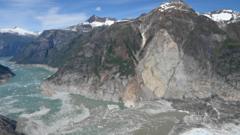
A devastating tsunami that struck Alaska's Glacier Bay in October 2023 ranks as the second largest ever recorded, according to new research. The megatsunami, triggered by a massive landslide from the Lithified Taku Glacier, reached heights of 630 feet and traveled across the bay at speeds exceeding 100 mph.
Scientists attribute the landslide to accelerating glacier melt caused by climate change. As warming temperatures destabilize glacial terrain, the risk of similar catastrophic events intensifies across Alaska and other regions with rapidly retreating glaciers. The October event occurred when a block of mountainside roughly the size of a city block broke free and plunged into the water, displacing enormous volumes and creating towering waves that fortunately struck an unpopulated area.
The only larger recorded megatsunami occurred in the same Glacier Bay location in 1958, when a 1,720-foot wave devastated the coastline. That event killed two people and reshaped scientific understanding of tsunami hazards. Today's research underscores how climate-driven glacier destabilization compounds this threat.
Glaciers across Alaska are melting at unprecedented rates, exposing unstable rock faces and weakening the structural integrity of mountainsides. As permafrost thaws and ice retreat accelerates, additional landslides become increasingly probable. Communities and infrastructure in coastal Alaska face growing exposure to these megatsunami risks, despite their relative rarity.
The findings add another dimension to climate change's cascading impacts. Beyond sea-level rise and thermal expansion, accelerating glacier melt now presents an acute hazard that planning agencies and emergency managers must account for in risk assessments and coastal development decisions.