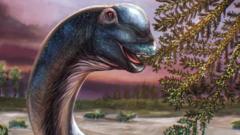
Paleontologists have identified a colossal new dinosaur species from fossils discovered in Thailand. The creature, named nagatitan, ranks as the largest dinosaur ever found in Southeast Asia, weighing approximately 600 metric tons—equivalent to nine African elephants combined.
The fossil remains, unearthed in Thailand's Khon Kaen Province, reveal a sauropod that dwarf previously documented species from the region. Sauropods represent the largest land animals known to science, characterized by long necks, massive bodies, and columnar legs built to support their immense weight.
The nagatitan joins a select group of titanosaurs that dominated the Late Cretaceous landscape roughly 100 million years ago. This discovery expands understanding of megafauna distribution across Southeast Asia during the Mesozoic Era. Previous fossil records from the region contained far smaller dinosaur specimens, making this find a major addition to paleontological databases.
The identification emerged from collaborative research involving Thai and international scientists who analyzed bone structure, size proportions, and anatomical features specific to sauropod taxonomy. The fossil's preservation quality allowed researchers to reconstruct details about the creature's skeleton and growth patterns.
This discovery carries implications for understanding dinosaur migration patterns and ecosystem composition in Southeast Asia. The presence of such a massive herbivore suggests an environment capable of supporting enormous herds and abundant vegetation. It also indicates that the region's late Cretaceous landscape differed markedly from modern ecosystems.
The nagatitan findings contribute to ongoing efforts mapping titanosaur diversity across Asia. Thailand has emerged as an increasingly productive fossil site, with ongoing excavations promising additional discoveries. Each new specimen helps scientists piece together the complex evolutionary history of sauropods and their ecological dominance before the mass extinction event 66 million years ago.