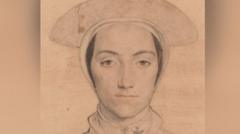
A computer science team claims to have identified a previously unknown sketch of Anne Boleyn, the second wife of King Henry VIII, using advanced facial recognition technology. The researchers analyzed historical portraits and archival sketches to reconstruct what they believe is an authentic depiction of the Tudor queen.
The team applied algorithmic analysis to compare known contemporary portraits with a sketch they believe shows Boleyn in her youth. By mapping facial features and bone structure across multiple images, they argue they've found visual evidence matching accounts from historical records. The findings challenge some existing assumptions about Boleyn's appearance based on later, potentially idealized portraits created after her execution in 1536.
However, historians and art experts remain skeptical. Critics point out that Tudor-era portraiture served political purposes rather than documentary accuracy. Artists often exaggerated or altered features to suit royal propaganda or reflect changing beauty standards. Additionally, the sketch's provenance remains unclear. Without definitive archival proof linking the image directly to Boleyn, the computer science approach raises questions about whether algorithmic matching can reliably authenticate historical artwork.
The debate reflects broader tension between computational analysis and traditional art historical methodology. While AI and facial recognition have proven effective for modern crime-solving and missing persons cases, applying these tools to centuries-old artwork introduces complications. Sources from the Tudor period are sparse, making it difficult to verify baseline assumptions the algorithm relies on.
Boleyn's documented appearance survives primarily through a handful of contemporary portraits, coins, and written descriptions. Her legacy has been continuously reimagined through literature, film, and popular culture, clouding what historical evidence actually exists. This project joins a growing body of work using technology to reassess historical figures, but the validity of such reconstructions depends heavily on source material quality and expert consensus around authenticity.