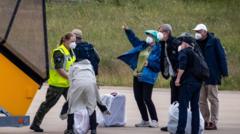
The UK, US, and EU have issued coordinated guidance requiring citizens who traveled aboard the MV Hondius to self-isolate for approximately six weeks following potential hantavirus exposure. The cruise ship became the site of a hantavirus outbreak, prompting health authorities across multiple nations to enforce strict quarantine protocols for returning passengers.
Hantavirus spreads primarily through contact with infected rodent droppings, urine, or saliva, and can cause severe respiratory illness. The virus carries a fatality rate between 38 and 50 percent in infected individuals, making rapid containment essential. Passengers aboard the vessel faced the highest exposure risk and represent potential vectors for spreading the pathogen to their home countries.
The six-week isolation period reflects the virus's incubation timeline, which typically ranges from two to eight weeks after initial exposure. Health officials designed this window to capture symptomatic cases before infected individuals could transmit the virus to their broader communities. This coordinated international response underscores how cruise ship outbreaks demand cross-border cooperation and uniform public health messaging.
The MV Hondius incident highlights persistent vulnerabilities in maritime travel and disease control. Cruise ships operate as high-density environments where respiratory viruses and vector-borne pathogens spread rapidly among passengers and crew from multiple countries. Previous outbreaks aboard vessels, including COVID-19 clusters, demonstrated how quickly infections propagate when people share confined spaces, dining facilities, and ventilation systems.
Health authorities in affected nations established clear communication channels with passengers, providing isolation guidance, testing protocols, and medical monitoring instructions. The rapid deployment of quarantine measures reflects lessons learned from earlier pandemic responses, where delayed action allowed variants to establish footholds in new populations.