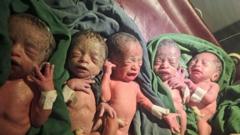
A 35-year-old Ethiopian woman delivered quintuplets after 12 years of infertility, marking a rare natural conception that defied medical odds. The mother described herself as "overjoyed" and "blessed with five at once" after years of praying for a child.
Spontaneous quintuplet births occur in roughly one in 40 million pregnancies globally, making this outcome exceptionally uncommon. Natural multiples of this magnitude typically result from a single egg splitting multiple times or, more rarely, five separate eggs fertilizing independently without fertility intervention.
The woman's case gains weight against the backdrop of sub-Saharan Africa's limited reproductive health infrastructure. Ethiopia ranks among regions with constrained access to advanced fertility treatments, meaning options like IVF or hormone therapies remain unavailable or unaffordable for most women. Her successful pregnancy without medical assistance underscores both the rarity of the event and the cultural weight of motherhood in many African societies, where infertility carries profound social stigma.
Maternal health outcomes in Ethiopia remain challenging. Childbirth complications, including those from multiple gestations, pose elevated risks in areas with inadequate prenatal care and limited neonatal intensive care capacity. Quintuplet pregnancies demand specialized monitoring to manage risks of premature delivery, low birth weights, and complications tied to carrying five developing fetuses simultaneously.
The BBC Health report frames this narrative through a lens of personal triumph and spiritual fulfillment rather than medical spectacle. The mother's emphasis on prayer reflects how many African communities contextualize reproductive outcomes through faith and resilience.
This story resonates beyond individual joy. It highlights disparities in reproductive healthcare access and outcomes across global geographies while celebrating an improbable biological event that statistically ranks among the rarest human experiences.