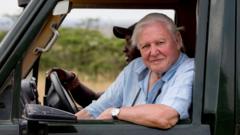
David Attenborough has transformed a corner of the English Midlands into the global epicenter of natural history television. The region around Bristol produces 80% of the world's natural history documentaries, a dominance built largely on Attenborough's pioneering work and the infrastructure he helped establish.
Attenborough's decades-long career at the BBC, starting in the 1950s, planted the seeds for what became "Green Hollywood." His groundbreaking series, including the iconic "Life" franchise, created demand for natural world content that shaped the entire industry. Production companies clustered around Bristol to access the expertise, talent pools, and broadcast partnerships that Attenborough's work had validated and normalized.
The concentration reflects economics and geography. Bristol sits near the BBC Natural History Unit, the corporation's flagship documentary division. Independent production firms sprouted nearby, creating a self-reinforcing ecosystem. Post-production facilities, wildlife cinematographers, animators, and sound designers all gravitated to the region. When Netflix and Disney+ began investing heavily in nature content over the past five years, they tapped existing networks rather than building elsewhere.
Attenborough's influence extends beyond production infrastructure. His narrative style, reverence for scientific accuracy, and ability to make complex ecology accessible became the template that shaped every competitor. Production companies hired directors trained in his methods. Streamers funded projects matching his formula because audiences responded to it.
The 98-year-old broadcaster remains active, with recent projects for BBC and Netflix maintaining his presence. His legacy anchors Bristol's dominance. Young filmmakers relocate there specifically to work within the Attenborough-influenced ecosystem. Universities expanded natural sciences and broadcasting programs to feed the local demand.
Other regions have tried replicating Bristol's success. None have matched the convergence of Attenborough's institutional credibility, existing talent density, and broadcasting infrastructure. The region's hold on global nature documentary production remains unchallenged, a monument to one broadcaster's influence on an entire genre.