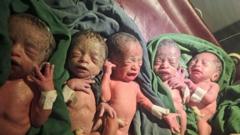
A 35-year-old Ethiopian woman delivered quintuplets after spending 12 years trying to conceive, marking a rare medical achievement. The mother said she had been praying for a child and felt "overjoyed" and "blessed with five at once."
Quintuplet births remain exceptionally uncommon globally, with natural conception producing such multiple births in roughly 1 in 60 million pregnancies. The odds increase dramatically with fertility treatments, though the woman's account doesn't specify her conception method. Ethiopia's healthcare infrastructure, while improving, historically has limited access to advanced reproductive medicine, making this outcome particularly noteworthy in a developing nation context.
The delivery underscores both personal resilience and modern obstetric capability. Women carrying multiple fetuses face elevated risks including gestational diabetes, preeclampsia, and premature labor. All five infants would require intensive neonatal care to monitor for respiratory distress and feeding complications common in premature multiple births.
This story reflects broader global fertility trends. Women delaying childbearing into their 30s and 40s increasingly turn to assisted reproductive technologies, yet many regions lack affordable access. Ethiopia's fertility rate remains high at roughly 4 children per woman, yet maternal mortality persists as a public health challenge. The successful delivery of quintuplets in such a setting demonstrates both medical progress and the desperation many feel after years of infertility.
The case generates human-interest appeal while highlighting disparities in reproductive healthcare access between wealthy and developing nations.
WHY IT MATTERS: Quintuplet births remain medically rare, and successful delivery in a resource-limited setting reflects advancing obstetric care globally while underscoring persistent fertility challenges.