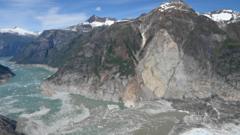
A catastrophic tsunami that struck Alaska in 2015 ranks as the second largest ever recorded, according to new research. The megatsunami, triggered by a massive glacier collapse in Taan Fjord, generated waves exceeding 190 meters high. Only the 1958 Lituya Bay tsunami, which reached 524 meters, surpasses it in recorded history.
Scientists attribute the event to rapid glacier retreat caused by warming ocean temperatures. As glaciers thin and destabilize, the risk of sudden collapses that displace enormous water volumes intensifies. The 2015 incident displaced roughly 300 million cubic meters of rock and ice, demonstrating the sheer force of these geological events.
Climate change amplifies this hazard. Rising temperatures accelerate glacier melt worldwide, weakening the structural integrity of ice sheets that hold back mountainsides. In Alaska specifically, glaciers are retreating at unprecedented rates. The research team warns that similar collapses could occur with increasing frequency in fjords across Alaska, Norway, Greenland, and other glaciated regions.
The 2015 event caused minimal casualties only because it struck a remote area. Had an equivalent tsunami hit a populated coastal zone, the death toll would rival major earthquakes or hurricanes. Communities in Alaska and beyond face real exposure to this emerging hazard.
This discovery reshapes how scientists model tsunami risk. Previous assessments underestimated the frequency of glacier-triggered megatsunamis. Updated models now incorporate climate projections to estimate future probabilities. Alaska's Taan Fjord remains monitored closely, as does Glacier Bay, where similar instability poses ongoing danger.
The research underscores a broader reality. Climate change doesn't just warm the planet. It fundamentally alters geological systems, triggering cascading hazards that traditional risk assessments overlooked.
WHY IT MATTERS: Climate-driven glacier collapse now ranks among the most powerful natural forces threatening coastal populations.