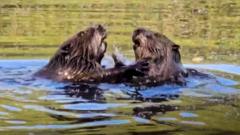
A pair of beavers has been spotted at Blashford Lakes Nature Reserve near Ringwood, marking the first confirmed sighting at the site. Camera footage captured the animals swimming in the reserve's waters, a notable moment for the conservation area.
The appearance represents part of a broader beaver reestablishment trend across the UK. After centuries of absence due to hunting and habitat loss, beavers have begun returning to British waterways through both natural dispersal and reintroduction programs. Several reserves and river systems now host active beaver populations that engineers and ecologists credit with creating wetland habitats and improving water quality.
Beavers function as "ecosystem engineers," their dam-building activities slowing water flow, creating deeper pools, and establishing wetland areas that support diverse plant and animal species. These wetlands filter sediment and nutrients while providing breeding grounds for amphibians, fish, and waterbirds. The ecological benefits extend beyond the reserves themselves, influencing flood management and water retention across broader landscapes.
The Blashford Lakes sighting comes as wildlife organizations continue advocating for beaver-friendly policies. Some areas have granted protected status to beaver populations, while others remain cautious due to concerns about tree damage and agricultural impacts. The reserve's documented sighting offers evidence that natural beaver colonization remains viable even in southern England's densely populated regions.
The discovery underscores how large mammals once considered extinct in Britain can reclaim ecological niches when conditions align. Blashford Lakes, already managed for conservation, provides suitable habitat with sufficient vegetation and water depth. The presence of these beavers suggests habitat corridors connecting to other suitable areas exist throughout the region.
THE TAKEAWAY: Beaver returns to UK nature reserves signal successful ecosystem recovery and the potential for large-scale wildlife reestablishment in restored habitats.