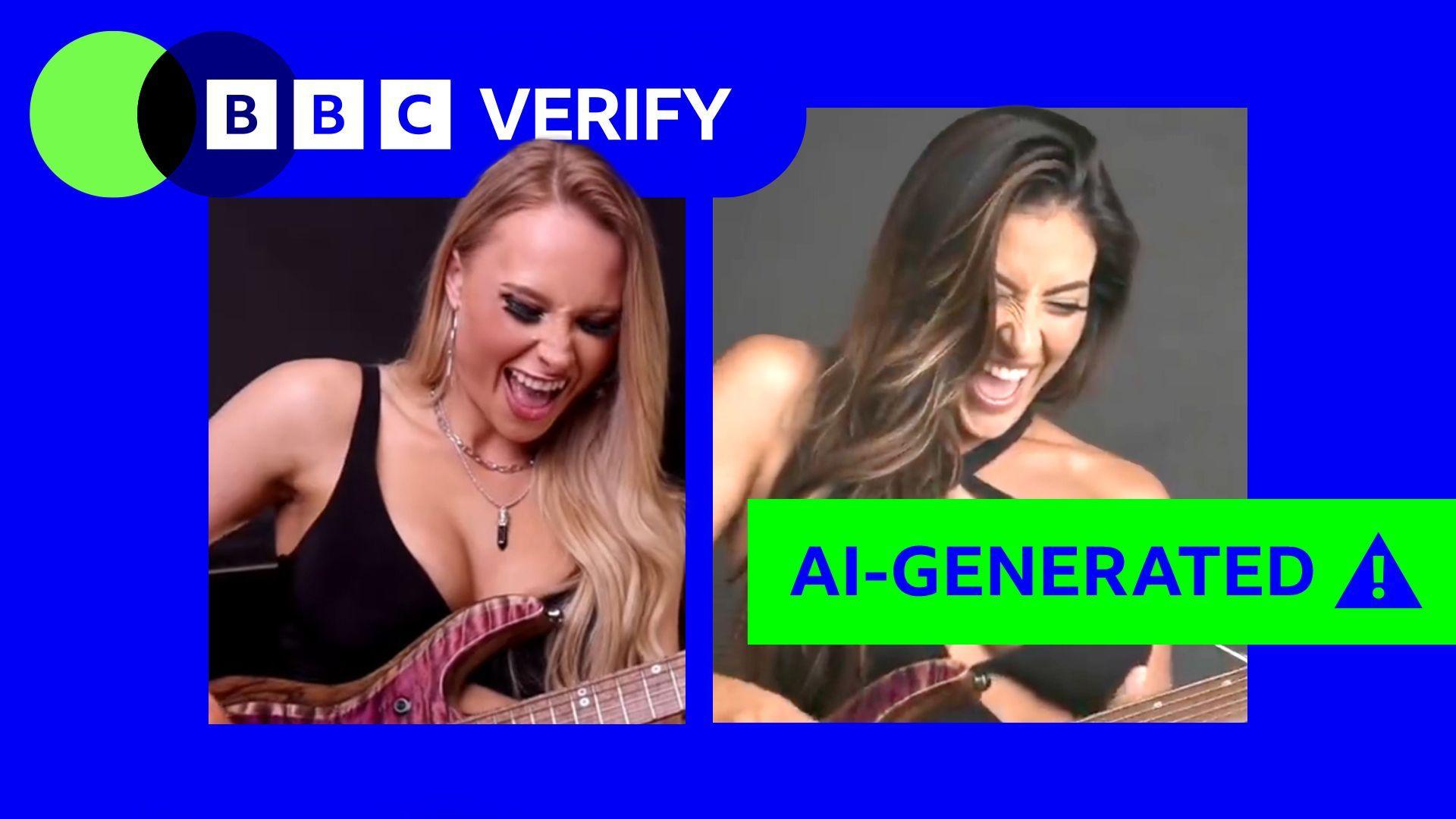
Content creators across social media report finding their performances cloned by AI-generated characters designed to resemble them, a practice experts call "reskinning."
The cloned videos often feature the same jokes, dances, movements, and backgrounds as the originals, sometimes attracting millions more views. Cheap, easy-to-use AI tools enable the copying. Accounts running these videos appear to earn money through subscriptions, cryptocurrency products, or platform monetisation features.
Guitarist Sophie Lloyd found hundreds of videos of an AI character called "Mila Vasari" that copied her performances using her exact music, movements, and facial expressions. BBC Verify found no evidence "Mila Vasari" is a real person and detected visual inconsistencies, including distorted fingers and guitar strings that fail to move when strummed. The account links to a subscription platform that allows creators to charge for adult content.
Norwegian dancer Kjetil Krogstad had a video reskinned with an AI-generated bunny that attracted millions of views, outperforming his original. The account promoting the bunny video was marketing courses on making money from AI-generated content.
Car creator Grace Roberts said someone stole her video and "changed me into basically the societal norm of what people want to watch." She identified her exact facial movements, body movements, background, and even copied bystanders in the AI version.
Dr Tina Kendall, an expert in online culture at Anglia Ruskin University, says people behind these accounts often copy already-popular videos hoping to attract audiences and revenue. The AI-generated characters are frequently "conventionally attractive, white, feminine" because that "floats to the top and is successful," Kendall says.
Comedian Julia Jasunas warned that AI bots going viral while appearing to be real people poses particular concerns for comedians, who post clips online to drive ticket sales to live performances.