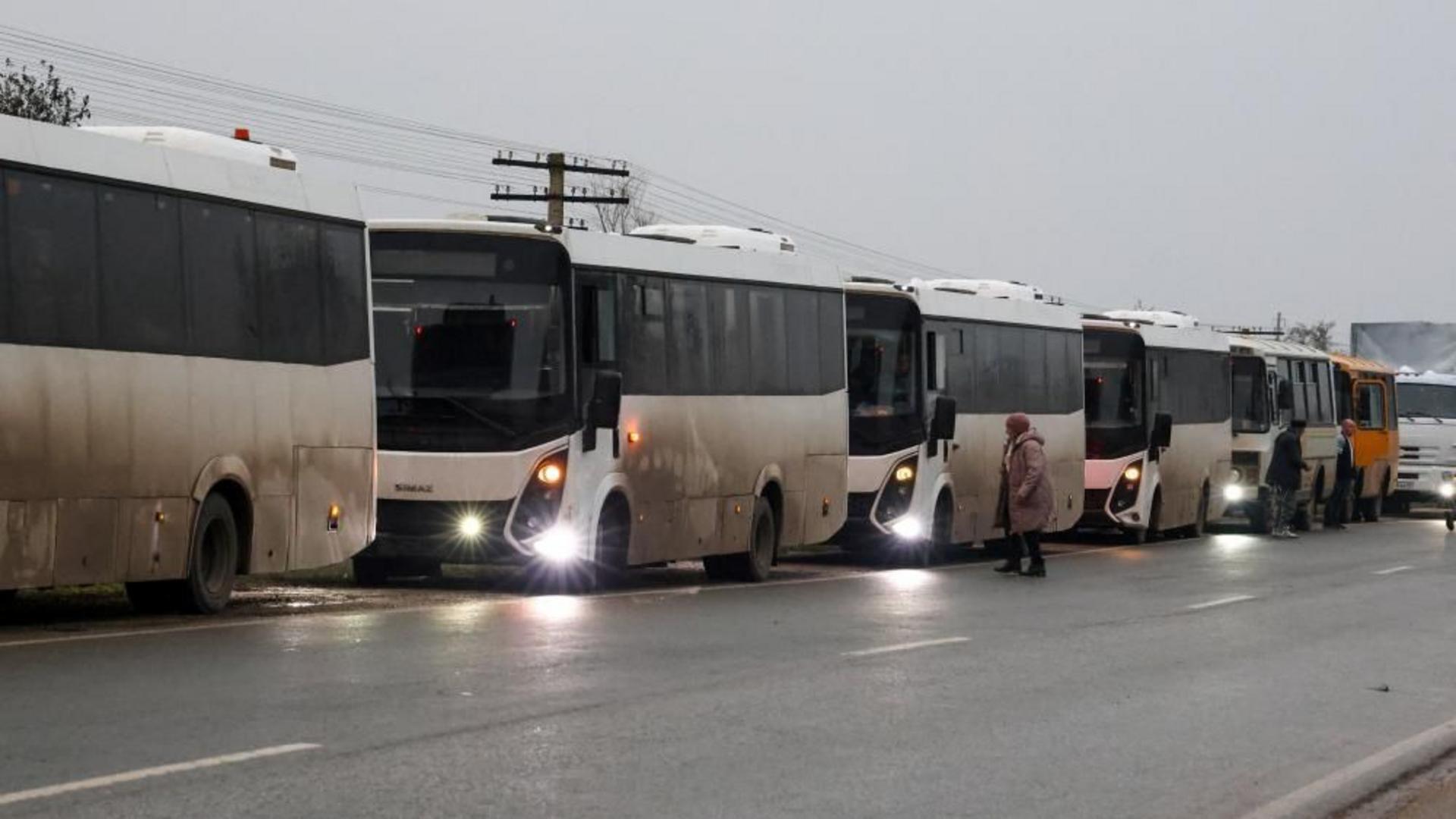
Residents of the Russian-occupied city of Oleshky crossed into Ukrainian territory on Friday and Saturday after a humanitarian ceasefire enabled their evacuation. The BBC reported that families reunited with raw emotion as evacuees arrived in the Chernihiv region, with some elderly residents so weak they required stretchers. Many had been trapped without food, water or electricity, resorting to cooking garden weeds to survive, according to the report.
Ukrainian President Volodymyr Zelensky credited US First Lady Melania Trump with brokering the local ceasefire that made the evacuation possible. Dmytro Lubinets, Ukraine's human rights ombudsman, said the oldest evacuee was 94 and the youngest was one year old. The convoy included 25 buses with capacity for 750 people, along with ambulances. The BBC reported that several hundred residents chose to stay despite widespread devastation and lack of utilities.
Evacuation required a perilous route through Russian-occupied territory, southern Russia and Belarus before entering Ukraine from the north, the BBC said. The ceasefire took effect Tuesday across the Kherson region and remains in place until the end of Sunday, November 1. Oleshky, home to 24,000 people before the war, had become extremely difficult to access because escape routes were mined and subject to drone attack, according to the report. One resident told the BBC he had walked through 24 kilometres of minefields to reach safety three weeks earlier.
Lubinets travelled to Oleshky with his Russian counterpart Yana Lantratova, making him the first Ukrainian official to visit Russian-occupied parts of Ukraine since the start of the war. The BBC reported that some in Ukraine objected to the sight of Lubinets standing beside a Russian representative, given the number of residents killed by Russian forces.