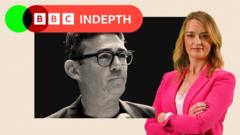
# Inside Andy Burnham: The Many Faces of Labour's Rising Star
Andy Burnham has become one of Labour's most visible and powerful figures, yet who he actually is remains contested even among those closest to him. BBC Political Editor Laura Kuenssberg's investigation into the Greater Manchester mayor paints a portrait of a politician who defies easy categorization, revealing a man whose allies and critics offer starkly different readings of his character, ambitions, and methods.
The investigation draws from interviews with more than 20 insiders, colleagues, and political observers who have worked with Burnham across his career spanning parliamentary politics, the shadow cabinet, and his current role leading one of England's most economically important regions. Their assessments range from flattering to deeply skeptical, exposing tensions in how Burnham presents himself publicly versus how those in his orbit perceive his actual motivations and decision-making style.
The "ruthless plotter" charge emerges repeatedly among some observers. This reading emphasizes Burnham's careful calculation in positioning himself within Labour's power structures, his willingness to shift allegiances, and his strategic moves up the party hierarchy. Those who hold this view suggest his mayoral role is less about serving Manchester and more about building a national political profile and platform for potential higher office. His handling of negotiations, particularly around funding and devolved powers, receives scrutiny from this angle.
Conversely, allies and supporters counter with a portrait of a dedicated public servant genuinely committed to levelling up the North. They point to his housing initiatives, his public health advocacy, and his willingness to challenge both Conservative and Labour leadership when Manchester's interests demanded it. From this perspective, flexibility in positioning reflects pragmatism rather than opportunism, a necessary adaptation to changing circumstances and political realities.
The "flip-flopper" accusation ties closely to Burnham's various political positions over time. His support for different Labour leadership candidates, his evolving rhetoric on party direction, and his approach to COVID-19 lockdown negotiations have all prompted questions about consistency. Whether these shifts reflect genuine evolution or pure political calculation divides his observers sharply.
The "dad dancer" angle hints at the personal, relatable side of Burnham that humanizes him beyond Westminster tribalism. His willingness to engage in populist cultural moments, his social media presence, and his efforts to seem approachable all factor into this dimension. Some see it as authentic connection to voters; others view it as calculated brand management designed to obscure harder political edges.
What emerges from Kuenssberg's reporting is that Burnham operates in multiple registers simultaneously. He remains Labour's primary voice on regional inequality and devolution, championing the North's economic claims against Westminster indifference. His mayoral track record combines genuine local policy wins with national political positioning. His ambitions, whether for Parliament again or continued influence from Manchester, remain strategically obscured.
The multiplicity of readings suggests Burnham has successfully maintained strategic ambiguity about his intentions and character. For Labour, he represents both a potential future leader and a complicating factor in party unity. For Manchester, he delivers material results alongside personal political advancement. The real Andy Burnham, according to his closest observers, contains all these versions at once.