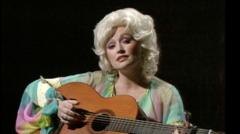
Dolly Parton's catalog spans six decades of unflinching storytelling. Six tracks stand as the most direct portraits of her life, each one a chapter in her journey from poverty in rural Tennessee to becoming an American cultural institution.
"Coat of Many Colors" remains her most autobiographical work. Released in 1971, the ballad recounts how her mother stitched together a patchwork coat from fabric scraps, transforming scraps into dignity. Parton's trembling vocals and sparse instrumentation revealed a songwriter willing to expose her childhood vulnerability. The song established what would become her defining mode: turning hardship into grace. It charted at number one on the country charts and introduced mainstream audiences to the emotional architecture of her songwriting.
"Jolene" followed in 1974, showcasing her ability to collapse complex female relationships into three minutes. The song presents a woman begging a rival not to take her man, but Parton transforms what could be a simplistic plea into something layered and human. She directs anger and fear toward Jolene while acknowledging the woman's power and beauty. The track became a global phenomenon, covered by everyone from The White Stripes to Miley Cyrus, proving that female vulnerability and agency could coexist in a single song.
"9 to 5" shifted her narrative toward workplace feminism. The 1980 hit, written for her acting debut in the film of the same name, articulated frustrations that millions of working women felt but rarely heard articulated in pop music. The track won a Grammy and an Academy Award, marking Parton's crossover into mainstream culture beyond country radio. It established her as a voice for female empowerment without preaching or anger.
"The Seeker" and "Jesus and Mama" reveal the spiritual dimension Parton has always inhabited. These songs move beyond romantic love toward faith, family, and redemption. Her songwriting tackles mortality and purpose, themes that deepen across her later work. Spirituality functions not as ornament but as foundation in her artistic vision.
"Travelin' Through" from her 2003 album showcases her mature voice, weathered but stronger. The ballad reflects on a life well-lived, carrying readers through joy and sorrow with acceptance rather than bitterness. Parton's later work prioritizes reflection over revelation, wisdom over novelty.
What emerges across these six songs is not a simple narrative arc but a consistent philosophy. Parton writes from specificity and lived experience. She refuses sentimentality while embracing emotion. Her stories center women's interior lives and their struggles, from economic hardship to romantic betrayal to spiritual yearning.
Her influence on country music and beyond stems partly from technical skill, but mostly from her refusal to diminish her own story. Where other country artists might sanitize their hardships, Parton insists on the raw details. A coat made from scraps becomes a anthem about dignity. A love triangle becomes an examination of female desire and vulnerability. These six songs represent Dolly Parton not as an icon polished for consumption, but as an artist committed to telling the truth as she lived it.