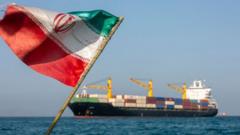
Iran's economy has adapted to decades of American sanctions through deliberate diversification and strategic partnerships. The country trades heavily with China, India, Turkey, and the United Arab Emirates, creating a trade network that circumvents traditional Western markets and reduces dependency on US-led financial systems.
China remains Iran's largest trading partner, accounting for roughly one-third of Iran's total trade volume. The relationship deepened after the 2015 nuclear deal (JCPOA) lifted restrictions, allowing Iranian oil to flow more freely into Chinese markets. India purchases significant quantities of Iranian crude at discounted rates, often accepting payment in rupees rather than dollars to navigate sanctions constraints. Turkey serves as a crucial transit hub for Iranian goods entering European markets, while the UAE operates as a financial intermediary despite its own US alignment.
These partnerships developed not from choice but from necessity. Traditional Western banks refuse to process Iranian transactions due to secondary sanctions risk. SWIFT access remains restricted for most Iranian financial institutions. This forced Iran to build parallel payment systems, barter arrangements, and cryptocurrency channels that operate outside conventional global finance.
The phrase "economic D-Day" references a hypothetical scenario where Trump administration policies could intensify maximum pressure on Iran. Trump withdrew from the JCPOA in 2018 and imposed sweeping sanctions targeting Iran's oil exports, banking sector, and key industries. A second Trump term could escalate these policies further.
If Trump administration officials pursue aggressive new sanctions, the consequences would ripple across Iran's trade network. Chinese importers might face secondary sanctions penalties for purchasing Iranian oil. Indian refineries could encounter restrictions on dollar access. Turkish businesses already operate in gray zones; additional enforcement could push them away from Iranian partnerships. The UAE, sensitive to US pressure, might further limit its role as a financial gateway.
However, Iran has demonstrated remarkable resilience. The country now exports oil primarily through tanker-to-tanker transfers in international waters, obscuring cargo origins. Sanctions evasion has become embedded in Iran's operational playbook. Prices adjust. Trade partners recalibrate. Shadow financial networks expand.
The real vulnerability lies not in Iran's ability to find buyers, but in the narrowing margins and rising costs. Secondary sanctions force Iranian traders to accept deeper discounts on oil sales. Intermediaries demand higher commissions. Insurance becomes impossible to secure through legitimate channels, raising shipping costs. Over time, these friction points erode state revenue.
For trading partners, intensified sanctions create difficult choices. China values its energy security and has shown willingness to absorb sanctions risk. India balances US relations with energy needs, typically reducing Iranian oil purchases during pressure periods but never eliminating them entirely. Turkey operates under NATO membership constraints but maintains pragmatic ties. The UAE finds itself caught between American military partnership and profitable Iranian commerce.
Any new sanctions regime would test these relationships. Nations trading with Iran would face binary decisions: prioritize US market access or maintain Iranian connections. Few would choose Iran when forced to choose. Yet few would abandon Iranian trade entirely, instead shifting to shadow markets, cash payments, and longer supply chains that obscure transactions.
The outcome depends on enforcement intensity and partner governments' risk tolerance. Complete trade isolation remains economically implausible. Managed decline through intensified friction remains the likeliest scenario.