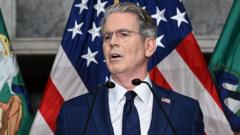
The Trump administration's latest Iran sanctions campaign represents the most sweeping financial pressure on Tehran since the 2015 nuclear deal collapse. US officials describe the measures as an "economic D-Day," targeting Iran's oil sector, banking system, and access to critical technologies. The administration has moved to isolate Iran from global financial systems and cut revenue streams that fund the government and its proxy networks across the Middle East.
Iran's government, however, signals confidence in weathering the assault. Iranian officials claim to have contingency measures in place to mitigate the economic fallout, though specifics remain unclear. The country has faced escalating sanctions pressure for years. In 2018, when former President Trump withdrew from the Joint Comprehensive Plan of Action (JCPOA), the US reimposed crippling restrictions that reduced Iran's oil exports from roughly 2.5 million barrels per day to under 500,000 within months. This latest round threatens to push those numbers even lower.
The timing matters. Oil markets already face volatility from geopolitical tensions and production uncertainty elsewhere. If these sanctions significantly constrain Iranian crude exports, global oil prices could spike, affecting energy-dependent economies worldwide. Brent crude has traded around $80 per barrel this year. Additional supply disruption could alter that calculus.
Iran's countermeasures likely include deepening trade relationships with China and Russia, who have resisted US pressure to enforce sanctions. Chinese refiners have purchased Iranian crude at discounts despite US penalties. Russia, facing its own Western sanctions over Ukraine, shares Tehran's incentive to circumvent American financial controls. Both countries can provide some economic lifeline, though neither can fully replace the scale of legitimate global trade Iran lost.
The banking sector faces particular strain. The sanctions target institutions that process Iranian transactions and foreign exchange. This makes it harder for Iran to import food, medicine, and industrial goods. Previous rounds of sanctions contributed to currency collapse, inflation exceeding 40 percent, and shortages of essential medicines. Ordinary Iranians absorb much of this pain through reduced purchasing power and limited access to goods.
The sanctions also squeeze non-oil sectors. The electronics, automotive, and petrochemical industries depend on imports Iran increasingly cannot obtain. Cryptocurrency and informal money transfer networks may provide some workaround, but these operate at smaller scales and higher costs than formal banking.
For the US, the logic centers on forcing behavioral change. Washington wants Iran to abandon nuclear ambitions, halt support for militant groups like Hezbollah and the Houthis, and reduce regional destabilization efforts. Whether economic pressure alone achieves these goals remains contested. Iran endured severe sanctions under the previous administration yet continued developing its nuclear program and expanding regional influence.
Iran's statement of readiness reflects both defiance and necessity. The country cannot prevent these measures, so officials project strength to their domestic audience. Economic hardship breeds discontent, and the government needs to appear capable of managing the crisis. Public confidence matters when inflation erodes savings and unemployment rises.
The question ahead is whether this financial offensive creates openings for negotiation or simply hardens positions on both sides. Historical precedent offers mixed signals.