# China's Factory Robot Revolution Extends Far Beyond the Headline Humanoids
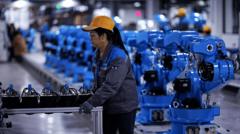
The flashy humanoid robots dominating tech headlines mask a deeper transformation already underway across China's industrial landscape. More than two million robots now operate in Chinese factories, and their deployment accelerates each quarter. This quiet automation wave reshapes manufacturing economics, labor markets, and supply chains at a pace that outstrips public attention.
China leads the world in both robot density and absolute robot installation numbers. The country deployed roughly 290,000 industrial robots in 2023 alone, according to the International Federation of Robotics data. This represents nearly half of all robots installed globally that year. The scale dwarfs what any Western manufacturer or tech company publicly showcases. Where Tesla or Boston Dynamics release slick videos of bipedal machines, China's factories simply integrate thousands of articulated arms, gantries, and specialized automation units into production lines that run 24/7 with minimal human oversight.
The economic incentive drives relentless expansion. Chinese labor costs have risen steadily over the past two decades. Manufacturing wages in coastal provinces now rival some developed economies. Automation becomes the logical response. A factory robot costs between $50,000 and $150,000 upfront but operates for eight to ten years with minimal maintenance. The payback period shortens each year as robot prices fall while wages climb.
This transition reshapes multiple sectors simultaneously. Electronics assembly, automotive production, semiconductor manufacturing, and textiles all accelerate their robot adoption rates. Companies like Geely, BYD, and state-owned enterprises install industrial robots at scales that dwarf individual Western plant expansions. The Chinese robotics industry itself grows. Local firms like Estun, GSK, and ABB's Chinese joint ventures capture market share from foreign competitors.
The structural consequences ripple outward. Displaced manufacturing workers face retraining or migration to service sectors. Coastal regions lose mid-skill factory jobs. Inland areas attract robot-powered "lights-out" factories that require fewer workers but demand higher technical skill levels. Rural-to-urban migration patterns shift. Social policy becomes more urgent. Pension and healthcare systems face pressure as fewer factory workers contribute relative to retirees.
Globally, this automation asymmetry matters. China's willingness to deploy robots at scale before Western competitors do creates cost advantages. Chinese manufacturers can lower prices or increase margins while maintaining competitiveness. Export-oriented industries gain structural advantage. Supply chains realign around automation-ready hubs rather than pure labor-cost arbitrage.
The humanoid robot storyline captures imagination. Companies like Tesla pitch a "Optimus" future where bipedal machines handle diverse tasks. Yet this narrative obscures the actual revolution already complete. Two million working robots in Chinese factories represent a manufacturing reality that no humanoid prototype matches in deployment or impact. That quieter story defines the present and future of industrial competition.