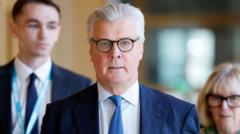
Malcolm Offord, leader of Reform UK in Scotland, disclosed a prostate cancer diagnosis and subsequent removal procedure in a statement released this week. The Scottish politician underwent surgery to remove his prostate last week and reports he has received an all-clear from medical professionals, declaring himself "raring to go" as he returns to his leadership duties.
Offord's announcement comes at a pivotal moment for Reform UK's Scottish operations. The party, which has positioned itself as a right-wing populist alternative to the Scottish National Party and established parties, continues to build its footprint north of the border. Offord's rapid recovery and public confirmation of his health status aim to reassure both party members and supporters that his leadership remains stable and uninterrupted.
Prostate cancer represents one of the most prevalent cancer diagnoses among men in the UK, with the NHS treating thousands of cases annually. Early detection and surgical intervention, particularly for localized cases, often result in positive outcomes when caught before metastasis occurs. Offord's decision to publicly disclose his diagnosis aligns with growing trends among British politicians to be transparent about health matters rather than keep such information private, a departure from historical political practice.
The timing of Offord's health disclosure reflects contemporary attitudes within Westminster and devolved parliaments toward personal medical information. Unlike previous generations of politicians who would have shrouded such matters in secrecy, current elected officials increasingly view transparency as both personally authentic and politically beneficial. This openness can actually strengthen public confidence when leaders communicate clearly about recovery and fitness to govern.
Reform UK itself has experienced significant momentum in recent electoral cycles, particularly in England where it captured 14% of the vote share in the 2024 general election despite winning only a handful of seats due to the first-past-the-post system. In Scotland, the party operates in a different political landscape dominated by the SNP's independence-focused agenda, making Reform's UK-focused unionist messaging a distinct alternative for certain voter segments. Offord's leadership in this context carries responsibility for carving out space for the party within Scottish politics.
Offord's swift return to public duties signals confidence in his recovery and his ability to continue managing Reform UK's Scottish organizational structure. The party faces ongoing challenges in translating voter interest into tangible representation within both the Scottish Parliament and Westminster constituencies. His health being resolved removes a potential complication in that larger strategic picture.
The broader context matters here. UK politics benefits from experienced leadership across all parties, and retaining capable figures like Offord contributes to the competitive ecosystem of ideas and representation. Political parties depend on their leaders to articulate vision and manage organizational complexity, roles that require sustained energy and focus.
Offord's statement positions his recovery as definitive rather than tentative, sending a message of stability to Reform UK members and supporters who might otherwise worry about succession questions or interim leadership arrangements. His "clear" status means he faces no anticipated ongoing medical complications that might interfere with his political responsibilities.