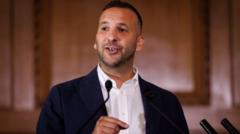
The Green Party has launched a fresh push to impose a windfall tax on major UK banks, positioning the levy as a direct mechanism to ease the tax burden on small businesses. Zack Polanski, the party's economic spokesperson, argues that banks reporting profits exceeding £800 million annually should face a temporary tax designed to fund substantial reductions in corporation tax for firms with turnover below £15 million.
The proposal targets what Greens view as outsized profits in the financial sector at a time when small businesses face mounting pressure from rising interest rates, energy costs, and general economic uncertainty. Under the scheme, approximately one million smaller enterprises would benefit from lower tax bills, according to Polanski's calculations.
This marks a renewed attempt by the Greens to reshape the tax landscape in Britain. The party has consistently advocated windfall taxes as a mechanism to redistribute wealth during periods of exceptional corporate profitability. The banking sector, which has benefited from rising interest rates and tighter credit conditions, represents a prime target for such intervention.
The timing reflects broader political momentum around small business support. The Labour Party, currently leading in polling, has previously supported windfall taxes on energy companies and banks. Rishi Sunak's Conservative government eliminated the energy windfall tax in April 2023, having initially introduced it under Boris Johnson's administration. The political appetite for such measures tends to ebb and flow depending on public perception of corporate excess and the broader economic climate.
The mechanics of a windfall tax present implementation challenges. Defining which banks qualify, establishing the profit threshold, and determining the tax rate all require careful calibration to avoid encouraging profit-shifting or reducing lending capacity. International comparisons offer mixed results. Spain and Italy have imposed temporary bank levies in recent years with varying degrees of success and economic impact.
Small business advocacy groups have expressed concerns about tax volatility and regulatory burden, though many recognize that corporation tax relief could improve cash flow and hiring capacity. The Federation of Small Businesses and similar organizations typically push for permanent, simplified tax structures rather than temporary windfall interventions.
The Greens' proposal arrives amid broader debate over Britain's tax competitiveness. The effective corporation tax rate has risen substantially since 2020, when firms faced a 19 percent levy. Current rates now reach 25 percent for large enterprises, placing the UK closer to G7 averages but potentially affecting investment decisions and business formation.
Whether this proposal gains traction depends partly on the next election outcome. If Labour returns to power, windfall taxes could feature in early budget announcements. The party has already signaled intentions to address energy bills and public sector funding through similar mechanisms. The Greens themselves hold no House of Commons seats but maintain influence through policy discourse and alliance-building with other left-leaning parties.