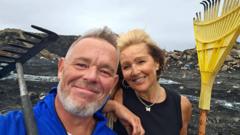
Greenpeace's attempt to highlight climate urgency through street art backfired spectacularly in a fire-ravaged region of Australia. Residents in the Dandenong Ranges near Melbourne removed a mural depicting Prime Minister Anthony Albanese after the area suffered devastating wildfires, rejecting what they saw as a tone-deaf environmental message amid genuine tragedy.
The activist group had painted the image on a scorched mountainside with the text "Our house is on fire, Andy" addressing Albanese directly. The slogan drew from the prime minister's own 2019 campaign rhetoric about climate action. Greenpeace framed the artwork as a call for stronger climate policy from the government. The timing, however, proved catastrophically insensitive.
The Dandenong Ranges fires destroyed homes, displaced families, and left communities reeling. Rather than resonating as climate activism, the mural read to locals as opportunistic grandstanding exploiting their trauma. Residents who had lost property and sense of security saw Greenpeace using their misery as a canvas for protest art. Community members organized to remove the mural, treating it not as political speech but as an unwanted intrusion during their recovery.
This incident exposes the friction between environmental advocacy and community interests, particularly when activism intersects with disaster zones. Greenpeace operates globally with a mandate to force climate conversations into public consciousness, often through disruptive or confrontational tactics. Their mural strategy aligned with that playbook. Paint a striking image in a visible location. Reference a political leader. Force the media to discuss climate change. The formula had worked before, but context matters.
Australians endure recurring wildfires intensified by climate change, making the underlying climate message legitimate. Yet disaster survivors prioritize immediate recovery, not policy lectures. They need resources, support systems, and space to process loss. A mural declaring "our house is on fire" to a community whose actual houses burned felt cruel to residents already processing that reality in material, permanent terms.
Albanese's government has committed to net-zero emissions by 2050 and rejoined the Paris Climate Agreement after the previous Coalition government's climate skepticism. The prime minister supports renewable energy investment and emissions reduction targets. This meant Greenpeace's mural message, though well-intentioned as pressure for faster action, landed on someone already moving in the direction the group wanted.
The removal of the mural represents a broader reckoning with how activism functions in damaged communities. Greenpeace likely believed they were amplifying urgent climate realities. Residents experienced it as exploitation of their suffering for propaganda. Neither interpretation is wrong, but the disconnect reveals how environmental messaging, however factually grounded, can alienate the very people most vulnerable to climate impacts.
The incident serves as a case study in activist overreach. Effective climate advocacy requires reading the room, respecting community autonomy during crises, and recognizing that not every moment demands a protest art opportunity. Greenpeace's Dandenong Ranges mural achieved the opposite of its intent. It sparked anger toward environmentalists rather than action on emissions, a costly miscalculation for a movement needing broader public support.