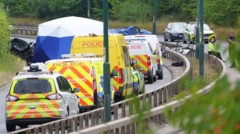
A wrong-way collision on the A66 near Middlesbrough has claimed seven lives, including two police officers responding to the incident. PC Matthew Blades and PC Tom Clough died when their vehicle struck a car traveling in the opposite direction on the major road in North Yorkshire.
The crash unfolded as officers attended to an earlier incident on the busy A-road. The wrong-way driver's vehicle collided head-on with the police car, killing both officers instantly. Five additional people perished in the collision, bringing the total fatality count to seven.
Wrong-way driving incidents represent a persistent danger on UK motorways and A-roads. These collisions typically result in severe or fatal outcomes due to the combined closing speeds of vehicles traveling toward each other. The A66 carries substantial traffic between the Midlands and the northeast, making such incidents particularly hazardous when they occur.
Police officers responding to roadside emergencies face heightened risk. They position vehicles to manage traffic flow and provide scene protection, often placing themselves in vulnerable positions near moving traffic. The deaths of Blades and Clough underscore the occupational hazards faced by law enforcement during routine traffic responses.
The incident prompted immediate investigation by local authorities and traffic management agencies. Road closures followed the crash as emergency services worked to clear the scene and recover victims. Authorities typically examine such incidents for factors including driver impairment, medical episodes, or mechanical failure that might explain the wrong-way travel.
Families of the deceased officers faced devastating loss. Police forces across the UK issued statements honoring the officers' service and expressing condolences to their families and colleagues. The wider policing community acknowledged the tragedy as a reminder of the dangers inherent in frontline law enforcement work.
The A66 forms a critical transport corridor. Disruption from the incident affected traffic patterns across the region for extended periods. Such major incidents frequently prompt discussions about road safety infrastructure, speed management, and detection systems for wrong-way drivers.
Dashboard camera footage and witness accounts helped authorities reconstruct the sequence of events. Reconstruction specialists examined vehicle positions, impact marks, and debris patterns to establish precise circumstances. Toxicology reports would determine whether impairment played a role in the wrong-way driving.
The crash added to the grim toll of road deaths in the UK. Annual fatality figures consistently highlight the lethality of head-on collisions, particularly when combined with high speeds or heavy vehicles. Prevention campaigns target speeding, impaired driving, and fatigue as primary contributing factors.
For the officers' police force, the tragedy necessitated counseling and support services for affected staff members. Witnessing colleague deaths creates psychological trauma across departments. Memorial services honored Blades and Clough's contributions to policing and their sacrifice during duty.
The incident generated renewed examination of road safety protocols, emergency vehicle deployment procedures, and infrastructure improvements that might prevent future wrong-way collisions. Barriers, signage, and detection systems received scrutiny as potential solutions to reduce such catastrophic crashes.