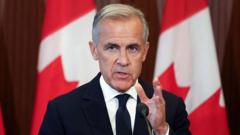
Canadian Prime Minister Justin Trudeau escalated trade tensions with the United States after negotiations over tariffs reached an impasse, labeling the Trump administration's latest duties a strategic error that will backfire economically.
Trudeau announced retaliatory tariffs on American goods, positioning Canada as a reluctant participant forced to respond to what he characterized as economic aggression. The move marks a breakdown in direct talks between Ottawa and Washington, signaling that diplomatic channels have cooled considerably.
The Canadian leader's use of the phrase "miscalculation" cuts deeper than standard trade rhetoric. It suggests Trump's tariff strategy will damage American interests alongside Canadian ones, undermining the economic integration that binds the two nations. Cross-border supply chains connecting automotive manufacturing, agriculture, and technology sectors face immediate disruption.
Canada's retaliation targets specific American sectors to maximize pressure on decision-makers. The strategy mirrors the approach both nations used during the 2018-2019 trade dispute under Trump's first term. Trudeau's government appears intent on demonstrating that tariffs carry tangible costs for American workers and businesses, not just abstract trade statistics.
The timing matters. These talks collapsed as negotiations were supposed to resolve disagreements over tariff levels and trade imbalances. Instead of finding common ground, the two governments appear locked in an escalation cycle where each action triggers a response.
For Canadian exporters already dealing with supply chain constraints and inflation, fresh tariffs create immediate uncertainty. Manufacturing plants that depend on cross-border parts shipments face production delays. Agricultural exporters face reduced access to the world's wealthiest consumer market.
Trudeau's framing also serves domestic politics. By positioning Canada as the victim of American overreach, he shifts blame away from Ottawa and rallies public opinion against Trump. Canadian voters may rally behind their government in the face of external pressure, strengthening Trudeau's hand domestically despite recent political challenges.
The collapse of these talks raises questions about the likelihood of a broader trade war that could pull in other allies. Mexico faces similar pressure over tariff disputes. The European Union watches closely, aware that escalating US protectionism could soon target transatlantic commerce.
Precedent suggests these disputes take months to resolve. The 2018-2019 standoff dragged on for over a year before partial resolution through negotiated settlements. Trade wars rarely end quickly. They grind on through cycles of retaliation and counter-retaliation until political pressure mounts on one side to seek de-escalation.
For now, Canadian businesses brace for extended uncertainty. Tariff costs pass through supply chains, raising prices for consumers on both sides of the border. The economic damage spreads beyond bilateral trade into productivity, investment, and growth forecasts for both nations.
Trudeau's "miscalculation" comment signals Canada won't back down unilaterally. The government chose confrontation over capitulation, betting that American pressure will eventually force the Trump administration to negotiate from a weaker position. Whether that gamble pays off depends on how long either side can sustain economic pain.