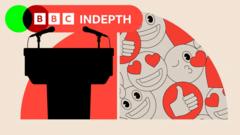
Politicians face a precarious needle to thread in the digital age. Those who remain absent from social media risk irrelevance and lose direct access to voters, while those who post constantly risk missteps, gaffes, and amplified controversies that can define their careers.
The stakes have never been higher. A single tweet can trigger a news cycle that drowns out policy messages. A misguided video can spark outrage across multiple platforms simultaneously. Yet staying silent means ceding digital real estate to opponents and appearing disconnected from the electorate they serve, particularly younger voters who consume politics primarily through social channels.
The BBC analysis highlights the asymmetry of modern political communication. A carefully crafted 280-character post reaches millions instantly, but deleting it rarely erases its impact. Screenshots spread faster than corrections. Meanwhile, politicians who avoid social media entirely surrender the ability to control their own narrative and communicate directly with constituents without media filtering.
Some officials have mastered the balance. Others oscillate between overexposure and absence. A few have learned the hard way that what plays well with a partisan base on Twitter can alienate swing voters or alienate their own party leadership. The phenomenon isn't new to politics, but social media has compressed the feedback loop and multiplied the audience exponentially.
The practical reality: there is no safe middle ground anymore. Politicians must either commit to sustained, strategic digital engagement with appropriate guardrails, or accept the consequences of being invisible to the platforms that increasingly shape public opinion. The cost of indifference is high. The cost of excess can be higher still.