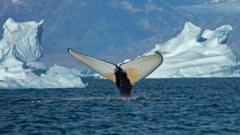
Melting Arctic sea ice is reshaping whale migration patterns across the North Atlantic. Giant whales, primarily fin and humpback species, now venture into Greenland waters in unprecedented numbers, exploiting food sources previously locked beneath thick ice sheets. Climate change has accelerated this shift by decades, scientists report.
The whales enter these newly opened regions during summer months to engage in intensive feeding periods. Warming temperatures have extended the ice-free season, allowing cetaceans to spend longer periods harvesting krill and small fish in nutrient-rich waters. This represents a major ecological realignment in Arctic marine ecosystems.
The phenomenon carries mixed implications. Whale populations benefit from expanded feeding grounds and access to prey concentrations. Yet the broader context reveals ecological instability. These whales relocate because their traditional feeding zones have transformed or become less productive. The Arctic's rapid warming has disrupted centuries-old migratory routes and feeding schedules that whales evolved to follow.
Greenland's fishing communities have noticed the change. More whale activity in local waters creates both opportunities for whale-watching tourism and complications for commercial fishing operations. Whale-ship collisions present navigation hazards, particularly in congested waters.
Scientists monitor these shifts closely. The whales' presence signals how dramatically climate change reshapes marine life behavior across the planet. While individual whale species may adapt to new feeding grounds, the underlying driver remains problematic. Sea ice loss accelerates across the Arctic annually, with profound consequences for polar ecosystems that depend on stable ice coverage.
The whales' "feeding frenzies" represent adaptation in real time. Yet they underscore a broader truth: Arctic warming proceeds faster than most ecosystems can naturally adjust. The arrival of giant whales in Greenland marks not ecological recovery, but transformation driven by rapid environmental collapse.