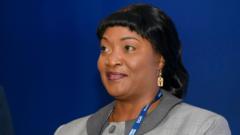
Jewel Howard-Taylor, former vice president of Liberia, faces charges of illegally facilitating, importing, and selling drugs, along with money laundering. The charges mark a significant development in West African drug enforcement and reflect intensifying scrutiny of high-level officials implicated in transnational narcotics operations.
Howard-Taylor served as vice president under Ellen Johnson Sirleaf from 2006 to 2018, making her one of Liberia's most prominent political figures. Her indictment signals that no rank shields participants in the region's drug trade, which has transformed Liberia and neighboring nations into transit hubs for South American cocaine destined for European markets.
The investigation underscores Liberia's vulnerability to trafficking networks. The West African nation sits along critical smuggling routes, and porous borders combined with limited enforcement capacity have made it attractive to drug cartels. Port facilities in Monrovia have repeatedly served as entry points for multi-ton cocaine shipments, often seized by international authorities.
Howard-Taylor's case parallels broader accountability efforts across the region. Guinea, Ghana, and Sierra Leone have all prosecuted officials and security personnel linked to drug operations in recent years. The charges suggest international pressure on Liberia to demonstrate serious action against corruption and narcotics trafficking, particularly as the United States and European nations tighten sanctions and cooperation mechanisms targeting drug transit routes.
The former vice president's legal proceedings will likely dominate Liberian politics and test the country's judicial independence. Her case represents a rare instance of prosecuting someone at her political level, potentially emboldening anticorruption investigators domestically while signaling resolve to international partners monitoring governance and rule of law in the nation.