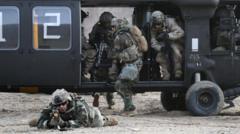
South Korea's military shortened joint war games with the United States this week following a direct request from Washington. The decision reflects the incoming Trump administration's broader effort to de-escalate tensions on the Korean Peninsula.
Trump has repeatedly signaled his intent to reduce large-scale joint exercises between U.S. and South Korean forces, framing the move as part of improving relations with North Korean leader Kim Jong Un. The president-elect has maintained his unconventional diplomatic channel with Pyongyang since his first term, when he met directly with Kim in 2019.
The shortened drills mark a tangible shift in military posture after years of routine, large-scale exercises that routinely provoked condemnation from North Korea. Seoul's decision to comply with the Washington request underscores the alliance's hierarchy and South Korea's dependence on U.S. security guarantees, particularly as nuclear tensions persist on the peninsula.
Military analysts note the reduction risks softening deterrence messaging to North Korea precisely as Pyongyang escalates weapons development. The regime has intensified ballistic missile tests and engaged in provocative rhetoric throughout 2024, while also deepening military ties with Russia.
Trump's focus on cost-cutting and perceived overextension abroad has made him skeptical of large military exercises globally. However, the Korea-specific reduction carries geopolitical weight beyond budgetary concerns. By publicly curbing joint operations, the incoming administration signals a willingness to accommodate North Korean grievances, a strategy that produced mixed results during Trump's first presidency.
South Korea's compliance reflects its delicate position. The country benefits from U.S. protection but faces direct threats from the North. Seoul has navigated Trump's unpredictability before and will likely continue calibrating its response to Washington's shifting Korea policy.