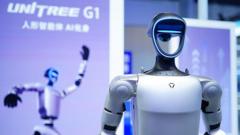
Unitree, the Chinese robotics manufacturer dominant in humanoid robot production globally, launched on Shanghai's Star market Wednesday with strong investor demand. The company's stock debut marks a major milestone for China's robotics sector, which has accelerated innovation in autonomous systems and AI-powered machinery over the past five years.
The Star market listing reflects growing institutional confidence in China's tech manufacturing capabilities, particularly in robotics and hardware. Unitree competes directly with Boston Dynamics and Tesla's humanoid division, but operates at lower price points with aggressive commercial deployment strategies. The company produces bipedal robots designed for logistics, manufacturing, and research applications.
Shanghai's Star market, launched in 2019, targets high-tech and innovative companies that may not fit traditional exchange criteria. Unitree's debut comes as Chinese tech firms increasingly list domestically rather than seeking US listings, a shift driven by regulatory uncertainty and geopolitical tensions. The robotics sector specifically benefits from government support through industrial upgrade initiatives and automation subsidies.
Investors drove strong opening-day trading, though exact share price movements remain fluid. The listing positions Unitree to fund R&D expansion and manufacturing scale-up across Asia. Chinese robotics companies have historically faced skepticism in Western markets over intellectual property concerns and supply chain transparency, but domestic capital markets provide alternative funding paths.
Unitree's success on the Star market signals momentum for hardware-focused AI companies in China. The robotics industry increasingly attracts venture and institutional capital as automation becomes critical infrastructure for manufacturers managing labor costs and production efficiency. This debut reflects broader trends reshaping where global tech companies choose to raise capital and build operations.