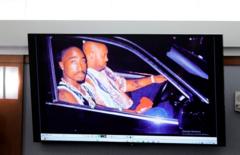
A witness to Tupac Shakur's fatal 1994 shooting testified that chaos erupted immediately after the rapper was gunned down in Las Vegas. The officer recalled that Tupac, despite sustaining multiple gunshot wounds, rejected police assistance and told authorities, "We'll take care of it," signaling he would not cooperate with the investigation.
The testimony emerged during an ongoing murder trial tied to the decades-old cold case. Tupac's death on September 13, 1994, remains one of hip-hop's most notorious unsolved murders, and this trial marks a rare opportunity to finally resolve the case that has haunted the music industry for three decades.
The witness account paints a picture of immediate pandemonium at the shooting scene. Officers described an environment where cooperation was impossible and the victim actively resisted intervention. Tupac's refusal to work with police became emblematic of the case itself. the rapper's resistance to law enforcement reflected both street code and the larger East Coast-West Coast hip-hop rivalry tensions that defined the mid-1990s rap landscape.
The trial represents a watershed moment for the music industry and law enforcement. For years, the killing of Tupac, then 25 and at the height of his career with Death Row Records, has been attributed to gang violence linked to the feud between Compton and New York rap factions. His murder, along with that of Biggie Smalls in 1997, defined an era of hip-hop marked by violence and loss.
This testimony cuts to the heart of why the case remained unsolved for so long. A victim unwilling to cooperate, a scene in upheaval, and the street code that discouraged snitching created investigative obstacles that persisted for decades. The current trial signals a shift in that dynamic.