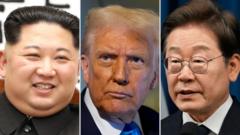
Donald Trump announced plans to substantially reduce joint military exercises between the US and South Korea, invoking his relationship with North Korean leader Kim Jong Un as justification for the move.
The shift marks another recalibration of Trump's Korea policy ahead of his second term. During his first presidency, Trump met with Kim Jong Un three times, breaking decades of diplomatic protocol. Those talks produced rhetoric about denuclearization but yielded no binding agreements. The US maintained joint military drills with South Korea throughout, despite Trump's complaints that the exercises were expensive.
This new proposal reverses that stance. By cutting back exercises, Trump aims to create space for renewed negotiations with Pyongyang. The move aligns with his transactional approach to foreign policy, where military posturing takes a backseat to dealmaking. Trump has consistently framed his personal rapport with Kim as a foundation for progress, even as North Korea expanded its nuclear arsenal under his watch.
South Korea faces pressure from the announcement. Seoul relies on US military support as a counterweight to North Korean aggression and Chinese regional influence. Reduced joint exercises signal a loosened commitment, potentially emboldening Pyongyang. South Korea's government has historically supported the drills as essential to readiness and interoperability with American forces.
The timing carries weight. North Korea has supplied troops to Russia's war in Ukraine, deepening its ties with Moscow. China maintains its strategic alliance with Pyongyang. Reducing exercises could hand both powers breathing room at a moment when regional stability remains fragile.
Trump's willingness to unilaterally alter long-standing military arrangements without consensus from South Korean leadership or Pentagon strategists underscores his administration's unpredictable approach to alliances. Whether this gambit produces diplomatic breakthroughs or simply weakens deterrence remains unclear.