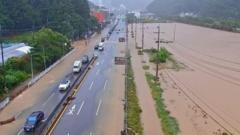
South Korea's capital region experienced catastrophic rainfall that triggered deadly landslides and widespread flooding. One person died in a landslide, with rescue operations ongoing across the affected areas. The deluge dumped record precipitation levels on the city, overwhelming drainage infrastructure and forcing evacuations from vulnerable neighborhoods.
The downpour reflects a broader weather crisis sweeping East and Southeast Asia. Multiple countries across the region have endured days of relentless heavy rain, turning streets into rivers and destabilizing hillsides. Meteorologists link the extreme rainfall patterns to seasonal monsoon systems intensified by warming ocean temperatures.
South Korea's weather service issued multiple alerts as precipitation rates shattered historical records. Commuter chaos gripped the capital with transit disruptions, school closures, and business shutdowns. Residents in flood-prone areas received emergency warnings, with authorities setting up temporary shelters for those forced from their homes.
The broader regional crisis extends from the Korean Peninsula through Southeast Asia. Thailand, Vietnam, and other nations reported similar downpours causing infrastructure damage and displacement. The scale of rainfall across multiple countries suggests a system-wide atmospheric pattern rather than isolated weather events.
Climate data shows that extreme precipitation events are increasing in frequency and intensity across Asia. Rising sea surface temperatures fuel stronger moisture-laden systems, creating conditions for record-breaking rainfall. Experts warn that aging infrastructure in rapidly urbanized areas amplifies flood risks as impermeable surfaces prevent water absorption.
Recovery efforts in South Korea focused on search and rescue operations, debris removal, and infrastructure assessment. Authorities prepared for potential secondary disasters including additional landslides and structural failures as saturated ground remains unstable.