# Rescuers Launch Search After Powerful Indonesia Earthquake Kills 47
A destructive earthquake has flattened hundreds of buildings across Indonesia, killing at least 47 people as rescue teams mobilize to find survivors beneath the rubble. Officials are conducting rapid damage assessments to determine the full scale of the disaster and coordinate response efforts across affected areas.
The quake struck with enough force to reduce residential and commercial structures to debris fields. The death toll reflects both the earthquake's raw power and the vulnerability of building infrastructure in regions prone to seismic activity. Rescue operations are racing against time, as survival rates for people trapped under collapsed structures drop sharply after the first 72 hours.
Indonesia sits on the Pacific Ring of Fire, a zone where tectonic plate movements generate frequent earthquakes. The archipelago experiences thousands of tremors annually, but only occasionally do they reach the magnitude and shallow depth needed to cause widespread devastation. When those conditions align, the consequences arrive with brutal speed. Densely populated urban areas and rural communities alike face exposure to this geological reality.
The rapid assessment phase indicates authorities are gathering real-time data on building damage, casualty counts, and infrastructure failures. This information shapes resource allocation, determines which areas need immediate evacuation, and identifies where aftershock risks might trigger secondary collapses. Communications networks often sustain damage in major earthquakes, complicating rescue coordination and slowing information flow to central command.
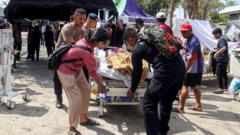
Rescue personnel typically work through multiple phases following a major quake. Initial teams prioritize access to densely populated areas and buildings most likely to contain survivors. Heavy machinery clears major roads. Specialized search-and-rescue units deploy dogs and detection equipment to locate signs of life. Local volunteers and residents often conduct the first rescue attempts, extracting people from partially collapsed homes before formal teams arrive.
The number of buildings destroyed provides context for the recovery timeline. Hundreds of destroyed structures suggest damage across multiple neighborhoods or entire towns, not isolated damage in one sector. Reconstruction will take months or years. Temporary shelter becomes an immediate priority for displaced residents. Water systems, electrical grids, and healthcare facilities typically sustain damage, creating secondary crises that compound the initial disaster.
Indonesia's disaster management agency coordinates these response efforts, typically requesting international assistance for large-scale earthquakes. Search dogs from neighboring countries, medical teams, and engineering experts often deploy within 24 to 48 hours of a major event. The window for finding survivors in rubble remains brutally short, making speed the defining factor in rescue success.
As rescuers dig through debris and officials complete their damage surveys, the focus remains on reaching trapped people before survival chances fade. The earthquake's full impact will emerge over coming days as assessment teams access more damaged areas and missing-person reports accumulate.