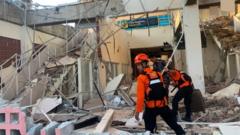
A magnitude 7.7 earthquake struck Indonesia on Monday, killing at least 47 people and triggering a massive search and rescue operation on Flores, an island in the eastern archipelago.
The powerful tremor struck off the coast of Flores, one of Indonesia's most seismically active regions. Rescue teams fanned across the island hunting for survivors trapped in collapsed buildings and debris. The death toll reflected the quake's intensity and the vulnerability of structures in the region, where building codes often remain inadequate for seismic activity.
Indonesia sits along the Pacific Ring of Fire, a zone where tectonic plates collide with brutal regularity. The country experiences hundreds of earthquakes annually, ranging from minor tremors to devastating strikes. The 7.7 magnitude earthquake ranks among the stronger quakes to hit the region in recent years, comparable in scale to the 2018 Sulawesi earthquake that killed around 4,000 people.
Initial reports indicated widespread damage across Flores. Homes crumbled, roads fractured, and communication lines severed in remote areas, hampering rescue coordination. Authorities deployed military personnel, police, and civilian rescue workers to assist victims. Medical facilities, already stretched thin in eastern Indonesia, mobilized emergency protocols to treat the injured.
The Indonesian government activated disaster response protocols. The National Board for Disaster Management coordinated with local authorities to assess damage, establish shelters, and distribute emergency aid. Power outages affected large sections of the island, complicating rescue efforts. Officials warned that the death toll could rise as rescue teams reached more remote communities.
Aftershocks followed the main quake, adding to survivor trauma and complicating rescue operations. Each tremor risked further structural collapse and delayed search efforts. Seismologists advised residents to remain vigilant for potentially damaging aftershocks in the coming days and weeks.
Flores has endured repeated seismic punishment. In 2021, a magnitude 7.0 earthquake struck the region, killing dozens. The island's geology guarantees ongoing seismic hazard. Building reinforcement initiatives have progressed slowly due to funding constraints and the logistical challenges of retrofitting homes across such a large area.
International aid offers emerged from neighboring countries and global humanitarian organizations. Search and rescue teams equipped with specialized equipment and trained personnel stood ready to deploy if Indonesia requested additional support. The disaster highlighted the ongoing vulnerability of developing nations to natural hazards and the importance of earthquake preparedness in high-risk zones.
Recovery would extend far beyond the immediate rescue phase. Families faced displacement, economic disruption, and long-term trauma. Reconstruction efforts typically require years of sustained investment and international support.