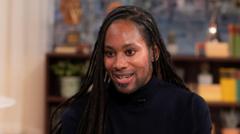
Jason Arday, a former Cambridge University professor who faced plagiarism allegations in recent months, has been found dead in London. The academic's family released a statement expressing their shock at his passing, describing him as "an amazing father, partner, brother, uncle and son."
Arday held a position at Cambridge and had become a visible public intellectual in British academia. His work centered on race, inequality, and social justice within higher education systems. He published widely and appeared regularly in media discussions about diversity and inclusion in universities.
The plagiarism row that engulfed Arday earlier this year cast a shadow over his career. Concerns emerged regarding the originality of portions of his academic work, triggering institutional reviews and public scrutiny. The allegations created significant tension in academic circles, particularly within Black British intellectual spaces where Arday had positioned himself as a prominent voice. The controversy raised questions about institutional accountability, peer review processes, and the pressures facing academics working in high-profile public roles.
Arday's death marks the end of a tumultuous chapter for someone who had become known for his appearances on television and in print media discussing systemic racism in British universities. His public profile grew substantially following the 2020 racial justice movements, when conversations about diversity in academia intensified. He leveraged this visibility to publish books and establish himself as an authority on educational inequality.
The plagiarism allegations, however, shifted the narrative surrounding his work and reputation. Academic institutions and publishers conducted investigations. The public row highlighted deeper conversations within academia about citation practices, the pressure to produce high volumes of work, and the particular challenges faced by scholars from underrepresented backgrounds operating in predominantly white institutional spaces.
His family's statement focused on his personal relationships rather than his professional legacy, suggesting a desire to step away from the public controversy that had dominated recent headlines about him. The sudden nature of his death has stunned colleagues and observers alike.
Arday's passing occurs at a moment when British academia continues grappling with questions of diversity, institutional racism, and intellectual integrity. The circumstances surrounding both his rise and the plagiarism allegations that followed reflect broader tensions within higher education about whose voices matter, how success is measured, and what happens when prominent academics face serious professional misconduct allegations.