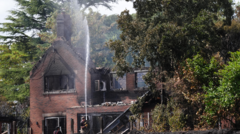
# Fires Prompt National Alert as 19 Homes Destroyed
England and Wales face a major fire emergency, with 37 active blazes burning across both nations and 19 homes already destroyed. The scale of the outbreak triggered a national alert from the prime minister, signaling a crisis that demands immediate coordination across fire services.
The simultaneous eruption of multiple fires across a wide geographic area points to conditions ripe for rapid spread. Dry weather, high temperatures, and low humidity typically create the tinderbox conditions that enable small incidents to become major disasters. Emergency services stretched across England and Wales are responding to competing calls, a strain that forces difficult triage decisions about where resources flow first.
The destruction of 19 homes represents immediate human catastrophe. Families face displacement, loss of possessions, and the psychological trauma that follows fire. Beyond individual households, communities absorb secondary shocks as neighbors evacuate, schools close, and local services redirect focus to emergency response. Some residents may not return to their homes for weeks or months while structural assessments and repairs proceed.
The prime minister's involvement signals government recognition that local fire brigades cannot contain this outbreak alone. The alert likely mobilizes additional resources, potentially including military support, mutual aid from neighboring regions, and coordination with police for evacuation management. National alerts also trigger media coverage that shapes public behavior—residents in threatened areas receive reinforced warnings to leave immediately rather than attempt evacuation during active fire approach.
Weather patterns will dictate whether the situation stabilizes or deteriorates. A shift toward rain or cooler temperatures breaks the conditions fueling spread. Wind direction changes determine which communities face imminent threat. Firefighters manage the fires themselves, but climate delivers the outcome.
The 37-fire count matters because it indicates this is not a single localized incident but a systemic emergency. Each fire demands crews, vehicles, water supplies, and command-center attention. Coordination failures amid multiple simultaneous incidents create cascading problems. A brigade stretched thin on fire A cannot respond quickly to fire B, allowing that blaze to establish before suppression begins.
Past major fire seasons in the UK have exposed gaps in disaster preparedness and climate resilience. The government response to this alert will shape public confidence in fire services' ability to handle worsening conditions. If resources prove adequate and evacuation procedures work efficiently, the narrative becomes one of effective crisis management. If breakdowns occur, questions mount about whether the UK has prepared adequately for more frequent, intense fire seasons ahead.
The immediate priority centers on preventing additional home losses, protecting lives, and managing evacuations. The longer-term question becomes whether this alert represents a new normal for British summers or a severe outlier year.