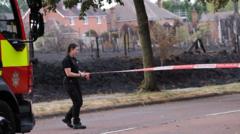
# UK Fire Services Battle Major Incidents as Residents Remain Displaced
UK fire services are operating under severe strain as multiple major incidents unfold simultaneously across the country, with crews responding to emergencies in Stourbridge, Sandwell, and Pershore while affected residents remain unable to return home.
The concurrent declarations of major incident status across these West Midlands locations reveal the scale of pressure facing emergency response infrastructure. When fire services declare a major incident, it signals that normal emergency protocols are insufficient and additional resources, personnel, and coordination between agencies become necessary. This escalation indicates either large-scale fire activity, significant property damage, or threats to public safety that extend beyond routine fire call parameters.
Stourbridge and Sandwell, both in the West Midlands region, sit within metropolitan areas with substantial residential and industrial populations. Pershore, located in Worcestershire, represents a third active incident zone. The geographic spread of these simultaneous major incident declarations places considerable demand on regional fire service capacity, particularly when crews must maintain staffing levels across multiple active scenes while managing evacuation logistics and community support for displaced residents.
The fact that residents remain unable to return home underscores the severity of these incidents. Displacement indicates either ongoing fire suppression efforts, property structural integrity concerns, or contamination hazards requiring remediation before habitation becomes safe. This situation creates secondary pressures on local authorities, who must coordinate emergency housing, welfare support, and logistics for potentially hundreds of displaced people while firefighters focus on scene containment and suppression.
The UK fire service sector has faced sustained budget pressures and staffing challenges over recent years. Simultaneous major incidents across multiple jurisdictions test the effectiveness of mutual aid agreements between regional services and the fire service's ability to borrow resources from less affected areas. These declarations likely triggered cascade protocols involving regional fire services, local authority emergency planning teams, and potentially national emergency coordination bodies.
The timing of multiple major incidents compounds response difficulties. If these emerged within a short window, crews cycling from other emergency calls face unavoidable delays reaching scenes. If incidents developed sequentially, the depletion of available personnel and equipment at earlier scenes reduces capacity for later responses. Either scenario strains a system designed with capacity margins that have narrowed significantly in recent years.
Public communication becomes critical when residents cannot return home during active incidents. Local authorities typically establish emergency rest centers, coordinate with voluntary organizations, and distribute updates through official channels. The communication burden on fire services simultaneously managing active suppression operations, evacuation coordination, and public reassurance tests already thin management structures.
The displacement situation raises questions about incident duration. Major fire incidents sometimes require days of dampdown operations and structural monitoring before properties receive clearance for reoccupancy. Extended displacement periods strain community resilience and create downstream demands on council services, housing associations, and emergency accommodation providers.
These incidents illustrate the interdependencies within emergency response infrastructure. Fire services coordinate with police controlling cordons, ambulance services managing casualties, and local authorities managing humanitarian response. The strain visible in concurrent major incidents ripples through this entire ecosystem, affecting response times for other emergencies across affected regions.