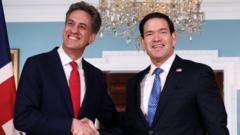
UK Foreign Secretary Keir Miliband pressed the importance of keeping the Strait of Hormuz open during talks with US Secretary of State Marco Rubio in Washington. Miliband framed the shipping lane's accessibility as essential to addressing cost-of-living pressures at home.
The Strait of Hormuz, a critical chokepoint through which roughly one-third of global seaborne oil passes, has faced recurring tensions. Regional instability, particularly involving Iran and its proxies, periodically threatens transit and drives crude prices higher. Miliband's remarks signal British concern that disruptions in this waterway directly inflame domestic inflation.
The meeting between Miliband and Rubio reflects broader coordination between London and Washington on Middle East stability. Energy security remains intertwined with economic policy across both nations. Higher oil prices ripple through consumer inflation, affecting everything from petrol pumps to heating costs, making maritime security a domestic economic priority rather than purely a geopolitical concern.
Rubio, Trump's top diplomat, has signaled a harder line on Iran than the Biden administration pursued. His appointment reflects renewed US scrutiny of Tehran's activities and those of its regional allies. The Miliband-Rubio talks underscore how energy security and cost-of-living crises have elevated shipping lanes from technical logistics issues to front-and-center diplomatic talking points.
Britain faces particular pressure on inflation and living costs, with household energy bills and fuel prices remaining politically volatile. Keeping crude flowing through Hormuz directly impacts UK household budgets. The foreign secretary's emphasis on this point shows how international diplomacy now explicitly ties to domestic economic pain.