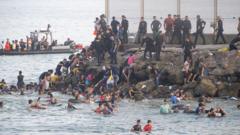
EU Commission President Ursula von der Leyen is pushing for tighter border controls following a surge of migrant crossings into the Spanish enclave of Ceuta. The call comes ahead of an emergency meeting of EU interior ministers to address escalating tensions over migration policy across the bloc.
The crossings into Ceuta, a Spanish territory in North Africa, have intensified pressure on member states already grappling with irregular migration flows. Von der Leyen's intervention signals the EU's commitment to reinforcing external border security while balancing humanitarian obligations. The urgency of the ministerial meeting underscores growing concern among EU leadership that current border management systems remain insufficient.
Spain, hosting the crossings, faces particular strain. Ceuta sits on the Morocco border and has historically served as an entry point for migrants seeking passage to mainland Europe. The fresh surge has reignited debate over burden-sharing among EU member states and the effectiveness of existing migration frameworks like the proposed asylum reform package.
Interior ministers will likely debate resource allocation for border enforcement, coordination with Morocco on migration prevention, and alignment on asylum processing standards. The issue cuts across partisan lines within the EU, with some states advocating fortress-like security measures while others emphasize integration and legal pathways for migrants.
Von der Leyen's statement reflects mounting political pressure from center-right and conservative factions within the EU, particularly in countries experiencing higher migration volumes. However, reaching consensus remains difficult. Disagreements persist over whether to prioritize deterrence, legal immigration channels, or enforcement partnerships with North African nations.
The Ceuta crossings represent the ongoing tension between EU migration policy ambitions and on-the-ground enforcement challenges. Border security remains a flashpoint for member state governments facing domestic political pressure.