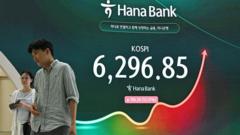
South Korea's stock market bounced back sharply after a brutal three-day selloff that evaporated hundreds of billions in market value. The recovery signals investor appetite returning to the region's equity markets, particularly among semiconductor stocks that drove much of the earlier decline.
The rout centered on the country's chip sector, which dominates South Korea's economy and export portfolio. Samsung Electronics and SK Hynix, the nation's semiconductor giants, faced intense selling pressure during the downturn. These companies carry outsized weight in the KOSPI index, meaning their weakness dragged the broader market lower.
The rebound reflects typical market dynamics after panic selling. Investors who missed the initial dip or held conviction in tech fundamentals moved back in, triggering a recovery rally. South Korea's chip stocks remain volatile as the industry navigates global demand cycles, geopolitical tensions around semiconductor supply chains, and competition from rivals like TSMC in Taiwan and Intel.
The three-day collapse highlighted the sector's sensitivity to macroeconomic headwinds and earnings concerns. Semiconductor cycles shift quickly, and South Korean producers face constant pressure from technology shifts, supply chain constraints, and shifts in AI-driven demand patterns.
The bounce matters because South Korea's export economy depends heavily on chip sales globally. When Samsung and SK Hynix decline, the country's broader growth prospects dim. A sustained recovery in these stocks suggests market confidence in both company earnings and global tech demand ahead.
This kind of volatility characterizes semiconductor investing. Chip stocks amplify broader market moves, drawing retail and institutional capital into sharp intraday swings. Traders closely watch semiconductor inventory levels, pricing trends, and customer guidance for signals about demand conditions.
The rally caps a turbulent week for Seoul's markets. Whether it holds depends on incoming corporate earnings data, global interest rate expectations, and developments in the AI hardware race that increasingly drives semiconductor demand.