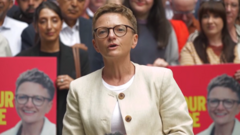
Bev Craig has won the Greater Manchester mayoral by-election, replacing Andy Burnham in the role. Craig's victory comes after Burnham stepped down to pursue a position in Parliament, triggering the contest. The newly elected mayor now inherits the expanded devolved powers that Burnham secured during his tenure.
Craig, a Labour politician, will assume office with significantly enhanced authority over transport, planning, and economic development across the ten boroughs that comprise Greater Manchester. These powers represent a watershed moment for local governance in the region. The expanded mayoral role allows direct control over bus franchising, a long-contested issue that gives mayors leverage over operators and fare structures. Planning authority gives Craig the ability to influence major infrastructure projects across the conurbation.
Craig's victory signals continuity in Labour's control of the region while presenting an opportunity to reshape how those powers are deployed. The mayoral office now operates with the kind of devolved decision-making that had previously required negotiation with central government. Transport authority extends to franchising negotiations with operators like Stagecoach and Arriva, matters that affect millions of daily commuters.
The by-election itself reflects Manchester's political landscape. Labour's hold on the mayoralty remains secure, with Craig inheriting not just Burnham's office but also his institutional relationships with the ten local authorities. Her administration will shape investment priorities, planning decisions, and service delivery across a metropolitan area of nearly 2.8 million people.
Craig takes office during a period of heightened scrutiny on local governance effectiveness. The expanded powers come with corresponding accountability expectations. Her success in the by-election demonstrates local Labour support for continuity, though how she deploys these devolved authorities will define her tenure.