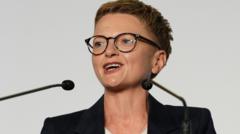
Bev Craig, a Labour politician, won election as mayor of Greater Manchester, securing nearly double the votes of her nearest rival, Reform UK's Sian Astley. Craig replaces Andy Burnham, who previously held the role.
The election results demonstrate Labour's continued grip on the Greater Manchester mayoral position. Craig's commanding margin over Astley reflects the party's dominance in the region, where Labour has held the mayoralty since the position was created in 2017. Burnham, who served as mayor before stepping down, maintained Labour's seat through his tenure.
The scale of Craig's victory signals voter rejection of Reform UK's challenge in this traditionally Labour stronghold. Reform, which has gained traction in some parts of England, failed to mount a credible threat to Labour's control of the metropolitan authority covering roughly 2.8 million people across the region.
Craig's win comes as Labour consolidates local power across much of northern England. The party's ability to retain the Greater Manchester mayoralty, one of the country's most prominent regional positions, underscores its electoral strength in post-industrial urban areas, particularly where traditional manufacturing bases have declined.
The mayoral role carries significant influence over transport, planning, and economic development across Greater Manchester's ten boroughs. Craig inherits responsibility for overseeing regional priorities including public transit improvements, green energy projects, and efforts to close economic gaps between wealthier and deprived areas.
Craig's election sets the course for Greater Manchester's leadership through the next mayoral term. Her victory reinforces Labour's regional dominance while signaling that Reform's growth remains geographically uneven, concentrated in specific constituencies rather than uniformly distributed across urban centers.