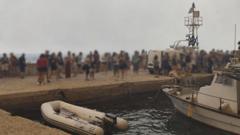
A wildfire in the Greek resort town of Agios Vasileios forced the evacuation of roughly 500 people, predominantly tourists, by sea as flames advanced toward the coastline. The group, unable to escape by road due to rapid fire spread, were rescued via boats and ferries deployed to extract them from the beach. Local authorities coordinated the maritime rescue operation as the blaze consumed nearby vegetation and structures.
The evacuation reflects the scale of wildfires currently ravaging southern Europe. Greece, already battling multiple active fires, has mobilized firefighting resources across the region. Neighboring countries including Spain, Italy, and Portugal face similar threats as extreme heat and dry conditions create tinderbox conditions across the continent. The timing coincides with an intense heatwave gripping the Mediterranean, where temperatures have reached dangerous levels in major cities.
Agios Vasileios, located south of Athens, attracted significant tourist populations during the summer season, raising stakes for evacuation operations. Authorities established safe zones along the shoreline as boats ferried residents and visitors away from immediate danger. No deaths or major injuries were reported in the Agios Vasileios operation, though fire-related casualties have occurred elsewhere in Europe this summer.
The incident underscores how European wildfires now routinely trap populations in previously considered safe zones. Climate patterns favor longer, more intense fire seasons. Greece experienced catastrophic wildfires in 2018 that killed over 100 people near Athens. Recovery infrastructure and evacuation protocols have since improved, but the intensity and speed of modern blazes continue testing response systems.
European Union nations have activated mutual aid agreements to share firefighting aircraft and personnel across borders. The crisis demands sustained resources as meteorological forecasts predict persistent heat through the coming weeks.