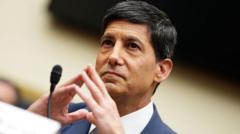
Federal Reserve Chair Jerome Powell held benchmark interest rates steady at 3.5-3.75%, signaling the central bank's pause in rate adjustments amid persistent inflation concerns. The decision aligned with market expectations and reflects the Fed's cautious approach to monetary policy as officials wrestle with sticky price pressures across the economy.
Powell addressed the economic outlook directly, rejecting the notion that rate policy alone solves inflation. "There is no magic wand," he stated, acknowledging the complexity of price dynamics that extend beyond the Fed's control. Inflation remains elevated compared to the central bank's 2% target, though it has moderated from 2022 peaks.
The hold signals the Fed's assessment that current rates have sufficiently tightened financial conditions without requiring further increases. Officials face a delicate balancing act. Raise rates too much and risk triggering economic contraction and job losses. Hold steady and risk letting inflation persist longer than desired.
Markets have already priced in the likelihood of rate cuts in 2024 if inflation continues its downward trajectory. Bond yields shifted slightly on the decision, while equity markets remained relatively stable. The pause underscores investor sentiment that the Fed has likely reached peak rates for this cycle, a sharp reversal from aggressive hikes that began in March 2022.
Powell's comments on inflation sources proved notable. Labor market tightness, supply chain disruptions, and global energy dynamics all contribute to price pressures beyond traditional monetary tools. Fiscal policy, energy markets, and commodity prices influence inflation alongside Fed decisions. This reality constrains what rate adjustments alone can accomplish.
The economic backdrop shows mixed signals. Employment remains relatively strong, though recent jobless claims have ticked upward. Consumer spending continues, but savings rates have depleted. Credit conditions tightened following regional bank stresses earlier in 2023. Against this backdrop, holding rates steady represents a measured holding pattern rather than a shift in direction.
The Fed signals it will monitor inflation data, labor market trends, and financial conditions before adjusting course. Rate cuts depend on sustained progress toward price stability. The next move likely comes only when inflation trends clearly