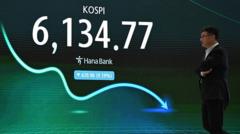
Chip stocks tanked across US and Asian markets Tuesday, with South Korea's Kospi index dropping 8% before trading halted. The sell-off reflects investor anxiety over artificial intelligence valuations and growth expectations that have driven semiconductor stocks to historic highs.
The Kospi plunge signals broader contagion in the chip sector. Major chipmakers including SK Hynix, Samsung Electronics, and TSMC face pressure as the market reassesses whether AI demand can justify current share prices. Semiconductor stocks have powered market rallies for months on expectations that training and deploying large language models would create explosive hardware demand.
Investors are now questioning the sustainability of that narrative. Supply chain concerns, potential oversupply in memory chips, and uncertainty around corporate AI spending plans triggered the rotation out of semiconductor positions. The selloff signals that the market may be repricing chip stocks after an extended rally that saw Nvidia, ASML, and other industry leaders reach valuations disconnected from near-term earnings growth.
This volatility exposes investor reliance on a narrowing group of AI-enabler stocks. When sentiment shifts, capital exits rapidly. The temporary halt of Kospi trading demonstrates exchange operators' attempt to prevent panic selling and stabilize markets. Similar circuit breakers exist on US exchanges to prevent flash crashes.
The chip sector remains essential to AI infrastructure, but Tuesday's decline suggests investors are demanding more proof that spending will materialize. Companies need to demonstrate concrete AI adoption from enterprise customers before the sector regains momentum. For now, the AI trade faces its most serious headwind since the generative AI boom began.