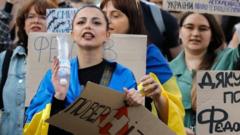
Ukraine's political stability faces fresh strain after President Volodymyr Zelensky removed Defence Minister Mykhailo Fedorov, triggering widespread protests and damaging Zelensky's political standing at a critical wartime moment.
Fedorov's dismissal sparked immediate backlash from Ukrainian civil society and political observers who view him as a reform-minded figure essential to modernizing the military. Protesters have taken to streets demanding his reinstatement, framing the move as a step backward for institutional reform efforts. The timing cuts deep for Zelensky, who built his political brand partly on anti-corruption credentials and military professionalization.
Zelensky now faces the political aftermath of the decision. Some commentators argue the removal inflicts real damage to his authority at a moment when Ukraine needs unified leadership. The president has attempted damage control, though the scope of discontent suggests his messaging has yet to fully contain the controversy.
The dismissal reflects deeper tensions within Ukraine's wartime government. Fedorov, a younger reformer, represented a faction pushing modernization and transparency. His removal signals either internal power struggles or strategic recalculation within Zelensky's circle. Either interpretation raises questions about governance priorities as Ukraine prosecutes its defense against Russian invasion.
For Ukraine's international supporters, the instability invites scrutiny. The U.S. and European allies invested political capital in Zelensky partly because of his reform messaging. Personnel shifts that appear to reverse that trajectory risk undermining confidence in his administration's direction.
Zelensky's government must navigate this carefully. Sustained protests or further defections among reform-minded officials could erode the domestic consensus necessary for the long war effort ahead. The crisis tests whether Zelensky can maintain both political authority and the institutional trust that underpins wartime governance.