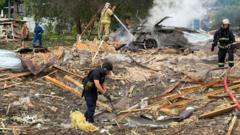
A Russian ballistic missile strike killed ten people at a drone exhibition near Kyiv on Wednesday. The attack targeted a major industry gathering that included top officials from Ukraine's defence sector.
The exhibition showcased cutting-edge unmanned systems and drew high-profile attendees from Ukraine's military-industrial complex. Russia's decision to strike during daylight hours, when crowds were densest, underscores its strategy of targeting Ukrainian defence infrastructure and leadership simultaneously.
The timing reflects escalating tensions along multiple fronts. Ukraine has accelerated drone production and deployment as a cornerstone of its battlefield strategy, compensating for weapons shortages with innovation. Russian forces have responded by systematically targeting manufacturing facilities, supply chains, and industry personnel.
This strike joins a pattern of Russian attacks on civilian infrastructure and gatherings deemed strategically relevant. Earlier this year, similar strikes hit military recruitment centers, logistics hubs, and defence ministry facilities across Ukrainian cities. Each attack aims not only to degrade military capability but also to demoralize the industrial workforce sustaining Ukraine's war effort.
The drone industry represents one of Ukraine's asymmetric advantages. Homegrown manufacturers like Maxim Shapilov's companies have produced thousands of first-person-view drones deployed on frontlines. These weapons cost a fraction of conventional munitions but deliver comparable tactical impact.
Russian missiles have grown increasingly sophisticated throughout the conflict, penetrating deeper into Ukrainian territory. Ukraine's air defence systems, stretched thin across vast territory, cannot intercept every incoming projectile.
The attack highlights the precarious position of Ukraine's defence sector. Workers, engineers, and executives now operate under constant threat. Rebuilding after strikes requires both resources and time, both scarce commodities in active conflict.