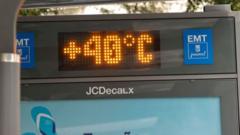
Extreme heat exposes critical infrastructure gaps across energy and transportation networks. Power grids and rail systems face operational breakdowns when temperatures spike, forcing service disruptions that cascade through entire regions.
Energy providers struggle most acutely. High heat reduces the efficiency of power generation and transmission. Coal and nuclear plants require massive water volumes for cooling, but drought conditions often coincide with peak heat waves, forcing operators to throttle output or shut down entirely. Overhead transmission lines sag under thermal stress, reducing capacity. Battery storage systems also degrade in extreme temperatures, limiting the grid's ability to balance supply during peak demand periods when air conditioning loads skyrocket.
Rail networks encounter similar problems. Steel tracks expand in intense heat, causing buckling and warping that forces speed restrictions or complete line closures. Rolling stock components fail more frequently. Services like the London Underground face tunnel temperatures exceeding safe operating parameters.
The infrastructure was designed for historical climate baselines. Engineers built systems assuming temperature ranges that no longer apply. As heat waves intensify and persist longer, these systems operate constantly at or beyond their design limits. Maintenance cycles can't keep pace with accelerated wear.
The problem intensifies for aging infrastructure. Many developed nations rely on networks built 50 to 100 years ago, before climate change projections entered planning calculations. Retrofitting requires enormous capital investment and operational downtime that utilities and transport operators resist.
Supply chain pressures compound vulnerabilities. Semiconductor shortages delay replacement of failed equipment. Manufacturing capacity for specialized grid components remains constrained globally.
Several countries now retrofit infrastructure proactively. Lighter-colored rail coatings reduce thermal absorption. Enhanced cooling systems protect electrical equipment. Microgrids and distributed generation reduce dependence on vulnerable centralized systems. These upgrades cost billions, but the price of inaction rises yearly as climate impacts accelerate.