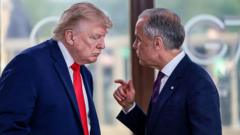
President Trump imposed 50% tariffs on Canadian imports, triggering sharp retaliation threats from Ottawa. The move represents the most aggressive trade action between the two countries in decades, escalating tensions that began with Trump's earlier tariff announcements on Mexico and China.
Canadian Deputy Prime Minister Chrystia Freeland responded by pledging to "intensify" trade negotiations, signaling willingness to engage while bracing for economic fallout. The tariffs target key Canadian exports including automobiles, energy products, and agricultural goods, sectors that employ hundreds of thousands of workers on both sides of the border.
The timing proves critical for Canada's economy. The country already faces domestic challenges including inflation and slower growth. Border-dependent industries report preparing contingency plans as uncertainty grips supply chains. U.S. manufacturers reliant on Canadian inputs, particularly in automotive production, face immediate cost pressures that could ripple through American consumer prices.
Trump framed the tariffs as leverage in renegotiating the USMCA trade agreement, the successor to NAFTA. He cited national security concerns and what he characterized as unfair trade imbalances. Canada exports roughly $370 billion in goods annually to the U.S., while importing approximately $310 billion, making the relationship asymmetrical but deeply interdependent.
Industry groups on both sides expressed alarm. The Canadian Chamber of Commerce warned of retaliatory measures that could harm American workers. Mexico also faces similar tariff threats, creating a complex three-way negotiation scenario.
Financial markets reacted swiftly. The Canadian dollar weakened against the U.S. currency, reflecting investor anxiety about the tariff war's scope. Oil prices fluctuated on concerns about Canadian crude exports facing new barriers.
Freeland's commitment to intensified talks suggests Canada intends to seek carve-outs or phased reductions rather than full-scale escalation. Both nations have history of resolving trade disputes through negotiation, though Trump's unpredictable approach creates substantial uncertainty about whether traditional diplomatic channels will succeed.