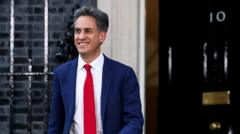
Ed Miliband has taken the foreign secretary role, stepping into a position vacated by Yvette Cooper. The Labour veteran and former energy secretary expressed that the job represents "the honour of my life."
Miliband's appointment marks a shift in his recent portfolio. Party observers had speculated he might pursue the chancellor position, but the government has instead placed him at the helm of the Foreign Office. His track record includes significant tenure as energy secretary, where he shaped Britain's approach to climate policy and green energy transitions.
The move signals Labour's priorities under the current government structure. Miliband's diplomatic profile and experience navigating complex policy challenges position him to handle international relations during a period of geopolitical tension. His appointment also reflects the party's evolution since he served as Labour leader between 2010 and 2015, a tenure that ended after the 2015 general election defeat.
The transition from Cooper to Miliband at the Foreign Office represents continuity with a shift in approach. Cooper, a seasoned politician with her own diplomatic experience, passes the portfolio to someone whose background spans energy diplomacy and domestic policy innovation. Miliband's emphasis on the role's significance underscores the weight the government places on international engagement.
This appointment comes as Labour navigates both domestic priorities and Britain's standing on the world stage. The Foreign Office role carries substantial responsibility for trade negotiations, diplomatic relationships with key allies, and responses to emerging international crises. Miliband's appointment suggests the party values his experience in managing stakeholder relationships across government, industry, and international partners cultivated during his energy portfolio tenure.