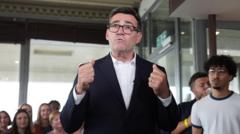
Andy Burnham is positioning himself as Labour's catalyst for political renewal following a strategic leadership pivot. The Manchester mayor has signaled an aggressive policy rollout designed to reset party momentum and reclaim electoral ground, according to BBC political editor Chris Mason.
Party insiders view Burnham's ascent as a potential turning point. His approach centers on tangible, locally-rooted policies rather than abstract messaging. As someone who has spent years managing a major metropolitan area, Burnham brings credibility on bread-and-butter issues: jobs, infrastructure, public services. This contrasts sharply with the perception that previous Labour messaging felt disconnected from working-class concerns.
The timing matters. With the Conservatives managing multiple crises and voter fatigue setting in, Labour sees an opening. Burnham's northern roots and regional power base offer something the party lacked under recent leadership. He speaks the language of towns and cities outside London, populations Labour hemorrhaged to other parties.
His policy blitz strategy signals a departure from reactive opposition. Instead of merely criticizing government failures, Burnham intends to front concrete alternatives on healthcare, economic regeneration, and regional investment. The Manchester model—his track record in urban governance—becomes the template for national ambitions.
What remains uncertain is whether policy alone can reverse Labour's structural challenges. The party's recovery depends on rebuilding trust in core constituencies that drifted away, not just articulating better plans. Burnham's advantage lies in authenticity bred by actual administrative experience.
The party machine appears unified behind this restart. If Burnham executes his policy agenda effectively while maintaining his public profile outside Westminster, Labour's prospects shift considerably. The next months will test whether his reboot gains traction with voters or whether deeper party problems persist.