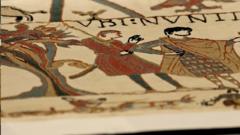
The Bayeux Tapestry, the 70-meter-long 11th-century embroidery depicting the Norman Conquest of England, arrived at the British Museum last week for its first exhibition on British soil in nearly 1,000 years. The medieval textile, which has remained in Bayeux, France since its creation around 1077, landed in the UK to be showcased at one of the world's most visited museums.
The tapestry chronicles the events leading up to and following the 1066 Battle of Hastings, where William the Conqueror defeated King Harold II. Created within a decade of the invasion, the work represents an extraordinary historical document rendered in wool thread on linen. Its 50 surviving scenes include intricate details of armor, ships, and court life that have made it invaluable to historians studying the period.
The British Museum's acquisition marks a rare moment in cultural diplomacy. French officials agreed to loan the artifact after significant negotiation, recognizing both its historical importance to Britain and its symbolic value as a shared heritage between the two nations. The museum prepared specially controlled environments to preserve the fragile textile, which has survived for nearly a millennium.
The display generates substantial tourism interest. Major loans of historical artifacts typically draw record crowds, and the tapestry's cultural cachet extends beyond academic circles into mainstream public consciousness. Museums hosting such exhibitions report significant increases in visitor numbers and extended visitor dwell times.
The British Museum has housed the Rosetta Stone and Egyptian mummies for centuries, but the Bayeux Tapestry represents a different category of loan. Its arrival underscores ongoing debates about artifact repatriation and cultural property ownership. While the tapestry belongs to France, Britain's connection to the Norman Conquest made this temporary exhibition a logical fit.
The exhibition runs for a limited period before the tapestry returns to Bayeux, making this a time-sensitive viewing opportunity for British audiences.