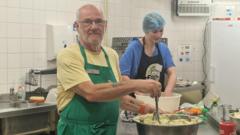
FoodCycle, a UK-based food charity, transforms surplus groceries into three-course community meals while simultaneously combating social isolation. The organization collects food that would otherwise reach landfills, then volunteers prepare and serve these meals to people facing loneliness and hardship.
The charity operates across multiple UK locations, partnering with supermarkets and food suppliers to source perfectly edible products destined for waste. Volunteers describe the work as deeply fulfilling. One volunteer credits the organization with pulling them out of isolation, framing the experience as mutual aid rather than top-down charity.
FoodCycle's model addresses two interconnected crises simultaneously. Food waste remains a systemic problem in developed nations, with supermarkets discarding edible inventory regularly. Simultaneously, social isolation has reached epidemic levels, particularly among older adults and vulnerable populations. The charity's approach treats both issues as solvable through community participation.
The three-course meal format matters. It signals dignity and inclusion, moving beyond emergency food provision into shared dining experiences. Volunteers and beneficiaries eat together, breaking down the hierarchies embedded in traditional charity models.
FoodCycle operates as a social enterprise, relying on volunteer labor and donated food to keep overhead minimal. This model scales more effectively than traditional food banks while building social capital within communities. The volunteer cohort becomes as important as the meal recipients, creating reciprocal relationships that address loneliness across demographic groups.
The organization's expansion reflects growing recognition that loneliness and food insecurity intersect with broader economic inequality. By positioning volunteering as therapeutic and meals as communal rather than transactional, FoodCycle reframes food waste and social disconnection as solvable through civic participation and collective action.